The essential gardening tools for a beginner are the ones that let you plant, water, cut and maintain your actual growing space comfortably. A small balcony and a new vegetable bed do not need the same equipment. Start with a few dependable hand tools, then add a specialized item when a recurring job gives you a clear reason to own it.
This is a task-based buying guide, not a shopping list that assumes you need everything at once. It compares what each tool does, what to check before buying and which purchases can wait. No product has been tested or ranked for this article, and the examples describe categories rather than endorsements of particular brands.
Choose a kit for the space you have
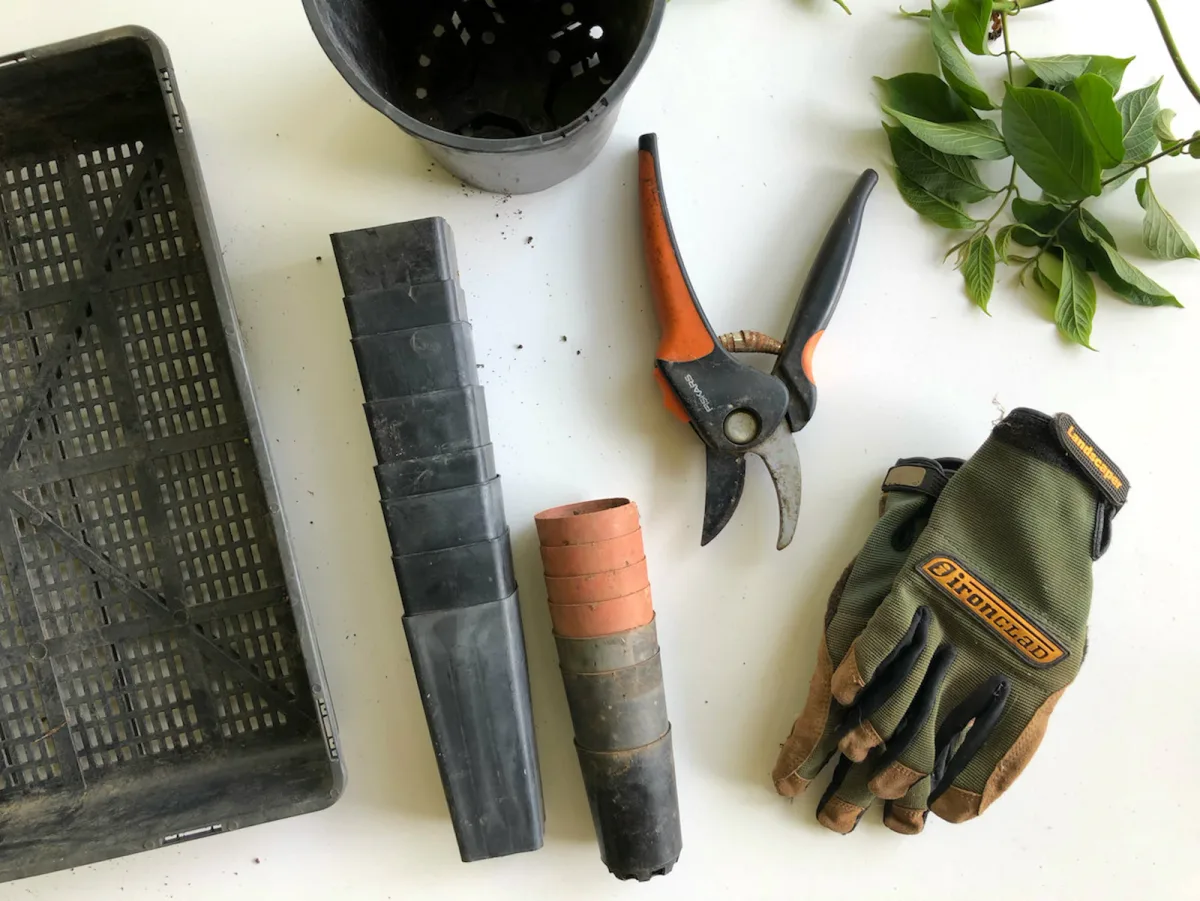
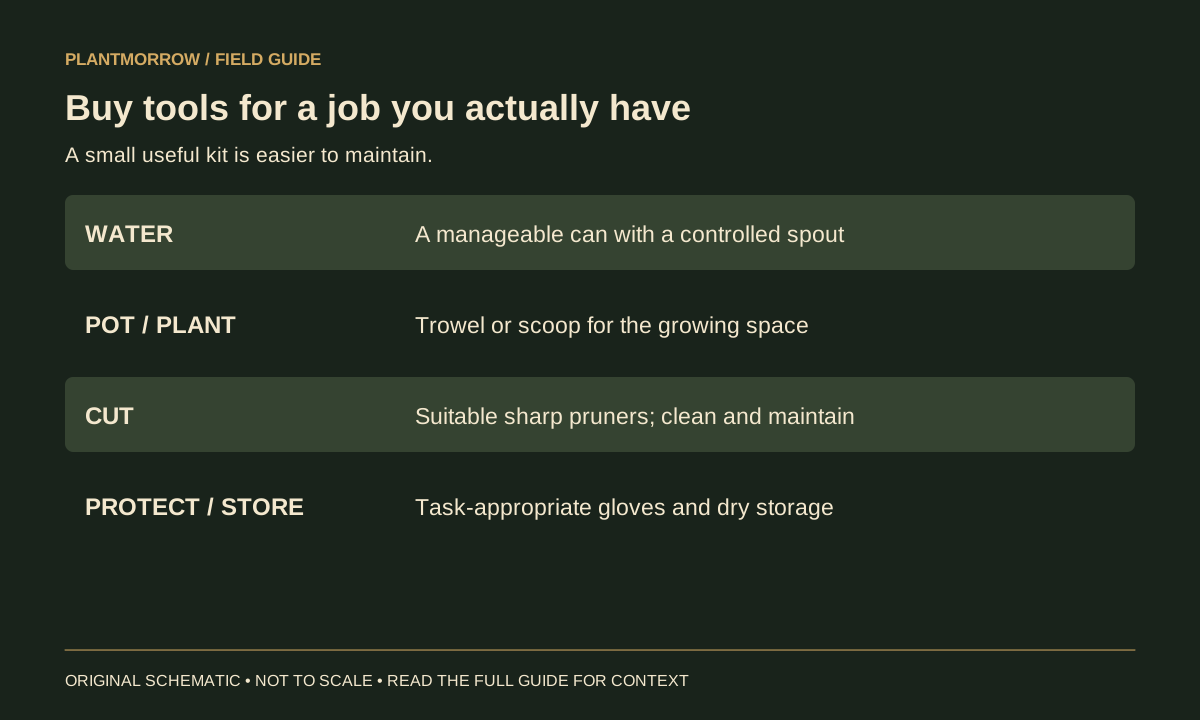
For a few pots, begin with a suitable watering can, a small trowel or scoop, gloves appropriate to the work and a cutting tool for the plants you grow. A tray or washable work surface can be more immediately useful than a long-handled tool that has nowhere to be stored.
For a small ground-level vegetable plot, add tools that fit soil preparation and weed management: perhaps a spade or shovel, a fork, a rake or a hoe, depending on the site and the work required. You do not need every variation before you understand which tasks recur.
Raised beds change reach and working position. A short-handled tool may work well in an accessible bed, while another layout calls for a longer handle that reduces awkward reaching. Judge the tool in relation to the bed and your body, not just the display stand in the shop.
The Washington State University overview of garden tools makes a useful case for a modest basic collection. Treat that as permission to buy selectively. A large matching set is not automatically more useful than three tools chosen for the way you actually garden.
The trowel: small jobs, close control
A hand trowel is useful for making planting openings, moving modest amounts of potting mix and working around small plants. Look for a comfortable handle, a secure connection between handle and blade, and a blade shape suited to the containers or soil you will use.
Try holding it with the gloves you expect to wear. The grip should feel manageable without excessive squeezing, and its size should not force your wrist into an uncomfortable position. A tool that looks robust can still be awkward for a particular hand or task.
A narrow trowel can fit between established plants or into smaller containers, while a broader blade moves more loose material. Neither should be used as a universal lever for stubborn roots or stones. Forcing a small planting tool into a job beyond its design can bend it or make it slip.
For frequent potting, a scoop may move loose medium more conveniently than a pointed trowel. This is a good example of an optional purchase: add it when you find yourself doing enough potting to justify a separate tool, rather than assuming every beginner needs both on the first day.
Watering equipment: control before capacity
Choose watering equipment that delivers water where you need it without being difficult to carry. A small indoor can with a controllable spout may suit pots, while seedlings can need a gentler delivery method. A large can filled to the top is not an advantage if it is too heavy to use comfortably.
For outdoor spaces with an appropriate water supply, a hose and suitable nozzle can reduce carrying. Check that the hose reaches without creating a hazardous route across paths. Think about storage and connections before purchasing a length that will spend most of its time tangled near the door.
Watering equipment does not decide when a plant needs water. A convenient nozzle can still deliver too much water to an unsuitable container. Pair the tool with the inspection approach in watering indoor plants and adapt the delivery method to the growing medium and plant.
If you consider an automated system later, identify the problem it is meant to solve and how it will be checked. Automation adds equipment and possible failure points; it does not remove the need to observe leaks, blocked emitters or changing plant requirements. Start with a setup you can understand.
Cutting tools: match the blade to the material
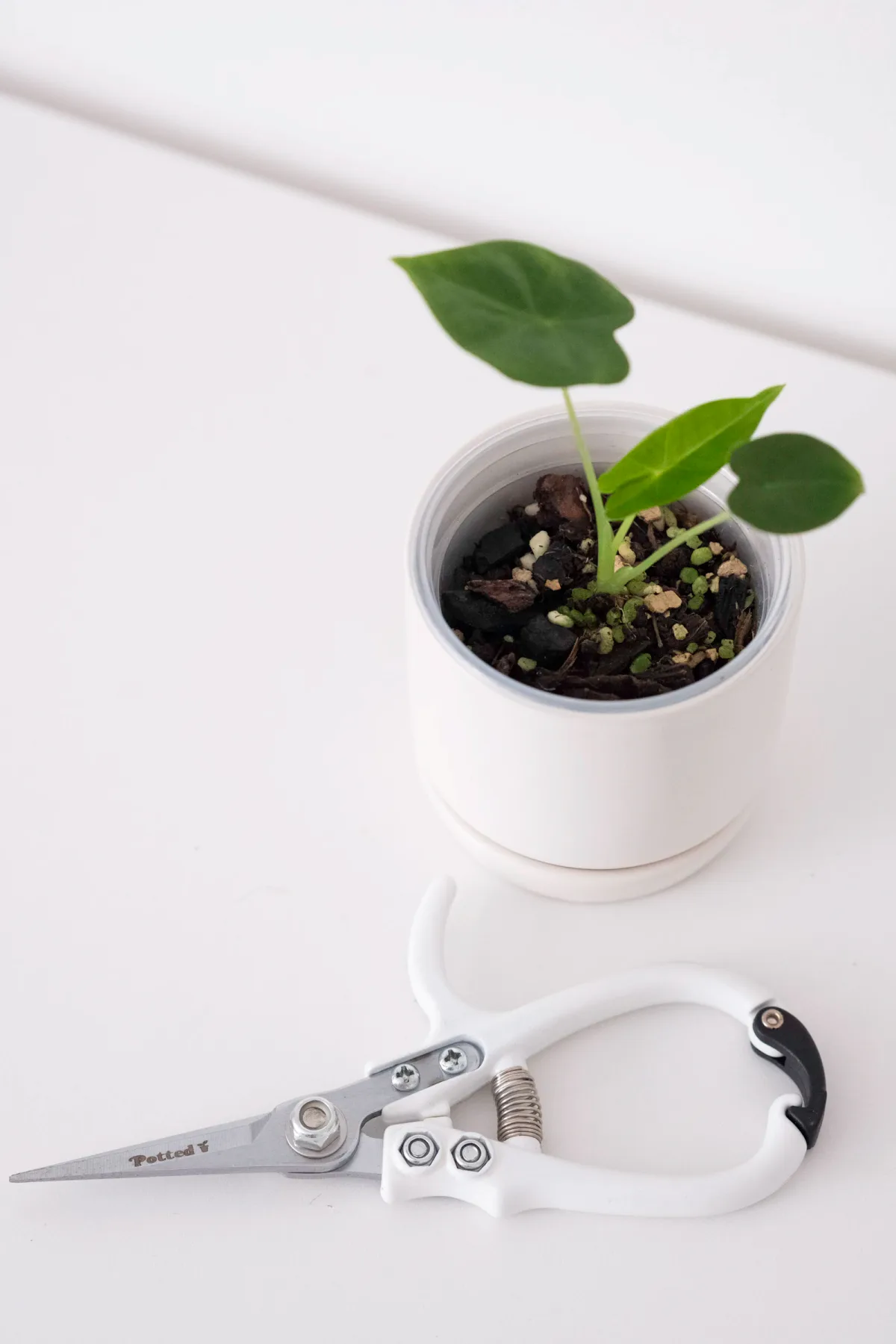
Small snips can help with delicate stems and harvesting appropriate herbs. Hand pruners are designed for more substantial cutting, with the exact capacity depending on the tool. Do not force either through material beyond its intended size just because it happens to be within reach.
Check the locking mechanism, handle spacing and how the tool opens and closes. You should be able to operate it without placing fingers near the blade. Left- and right-handed preferences, hand size and strength can all affect comfort, so handling the tool before buying is valuable where possible.
Bypass pruners use two passing blades and are a common option for appropriate live growth. Other cutting designs have different purposes. Learn the task and material first; choosing a familiar-looking mechanism is not a substitute for understanding where and how to cut a plant.
Use the houseplant pruning guide before shortening an unfamiliar plant. A sharp tool cannot make an unsuitable pruning decision safe. Palms, vines and branching woody plants have different growth patterns, and some cuts cannot be corrected afterward.
Gloves and practical protection
Gloves should suit the material you are handling. A lightweight pair useful for potting may not provide suitable protection from thorns or sharp debris. Check fit, grip and the manufacturer’s stated purpose rather than choosing only by appearance or a generic gardening label.
Consider other task-specific precautions. Closed footwear, protection from sun and appropriate eye protection may be relevant depending on the job. If a task requires equipment or training beyond your experience, seek appropriate help rather than assuming ordinary gardening gloves make it manageable.
Wash hands after handling soil, growing media or garden products, even when gloves were worn. Follow the precautions printed on bagged media and product labels, including dust-related handling advice. Keep those materials separate from food preparation and do not store them in unmarked drink containers.
Protection also includes the way you organize work. Keep tools visible rather than hiding blades under removed foliage. Put waste into a container as you go, and create a stable place to set down sharp equipment. A tidy workflow reduces unnecessary handling and searching.
Long-handled tools: buy for a real recurring task
A spade or shovel becomes useful when you need to move or dig material at a scale beyond a hand tool. The right choice depends on the job, soil and your working position. A tool that is too long, heavy or awkward can make a small task more difficult rather than more efficient.
A garden fork can be useful for particular soil and compost tasks, while a rake helps with gathering material or preparing a suitable surface. A hoe serves another purpose again. The Illinois Extension tool guide connects common tools with their uses, helping you identify what is relevant to your space.
Do not assume a new plot must be aggressively dug simply because you bought digging tools. Soil condition, existing vegetation and the chosen growing approach should guide preparation. See improving garden soil before deciding which intervention is needed.
Borrowing or hiring a tool for an occasional larger job can make more sense than storing it indefinitely. Ask how it should be used and maintained, check its condition and obtain appropriate instruction. Equipment you rarely use still needs safe handling and somewhere secure to live.
Fit and maintenance are part of the price
Compare the whole ownership task: purchase cost, storage, replacement parts, cleaning and sharpening where appropriate. A cheap tool that hurts your hand is not good value, while an expensive one is unnecessary if it solves a problem you do not have. Comfort and a suitable purpose belong in the same comparison as durability.
Inspect handles and connections before use. Cracks, loose fittings and damaged blades deserve attention rather than being ignored until a tool fails during a task. Follow the manufacturer’s maintenance guidance and replace damaged equipment when it cannot be made safe.
Keep cutting edges maintained by an appropriate method, and get help if you do not know how to sharpen a tool correctly. Sharpening the wrong surface or changing a blade’s profile can make it perform poorly. Do not treat a general online demonstration as a substitute for understanding the particular tool.
Store tools so that blades are protected and equipment can dry appropriately after cleaning. A locked or otherwise suitable storage arrangement matters where children or pets can reach the workspace. The best storage system is one you can use consistently after a tiring gardening session.
Clean first, disinfect when the situation calls for it
Remove soil and plant residue from tools after use. Cleaning makes inspection easier and prepares the surface if disinfection is needed. Disinfecting a visibly dirty tool is not the same as a sensible cleaning process, because remaining debris can interfere with the intended treatment.
The University of Minnesota equipment-cleaning guide identifies situations in which preventing transfer between plants or sites matters. Follow suitable product directions, including contact time and material compatibility. Do not combine household chemicals to create your own stronger disinfectant.
Keep tools used on questionable or diseased material from moving through the whole collection without appropriate cleaning. This is especially important when you move between gardens or share equipment. A borrowed tool should come with a conversation about condition and cleaning, not only a convenient handover.
For everyday maintenance, make cleanup easy: keep a brush, an appropriate washing area and a dry storage place available. If putting a tool away requires an elaborate sequence, it is more likely to be left wet in a bucket. A simple routine helps protect both the tool and the next plant you use it on.
Build the kit in three rounds
Round one: start growing. Buy only the tools needed to plant and maintain the first pots or bed. Keep the list tied to specific tasks you will perform in the next few weeks, not every possible gardening activity you might eventually try.
Round two: notice repeated friction. If a task is consistently awkward, identify why. Perhaps the watering can is difficult to control, the handle does not fit or you need a better way to move potting mix. Buy the tool that addresses that issue rather than adding another general set.
Round three: specialize deliberately. Add equipment for a new activity only after understanding its requirements. Seed starting, pruning woody plants and maintaining a larger plot can each justify different additions. This gradual approach gives you practical reasons for every item in the kit.
For a hypothetical balcony gardener, the first round might contain a small can, gloves, a trowel and appropriate snips. A ground-level grower’s list could be different. Neither list is more serious; each is useful when it matches the space, plants and person doing the work.
Questions before you buy
Is a large beginner tool set a good shortcut?
Only if its contents match your tasks and the tools fit comfortably. Count the items you will actually use rather than the number advertised. A smaller collection can be easier to maintain and store, with room to add a better-suited tool later.
Do I need a moisture meter immediately?
It is optional, and any reading needs interpretation. Learn the plant’s requirements, growing medium and pot first. A meter is supporting information rather than an automatic watering instruction, and it should not replace observation of drainage, pot weight and the plant’s condition.
Which tool is most useful for a few indoor pots?
Choose the next task, not a universal winner. Controlled watering equipment is fundamental, while a small trowel or scoop helps with potting. A cutting tool becomes useful when the plants genuinely need appropriate pruning. Do not buy equipment for tasks you are not planning to do.
What should I postpone?
Postpone specialized or powered equipment without a clear recurring purpose, suitable storage and the knowledge to use it. Borrowing can help you understand a task before purchasing. Spending more time planning a workable small kit is usually better than storing a large collection you do not understand.
The next useful purchase
Write down the next three gardening jobs you intend to do. Check which tools you already have, which can be borrowed and which need to be bought. Choose for comfort, control and a clear purpose, then build a simple care routine around using and maintaining that modest kit.
Read further
Sources & further reading
Selected horticultural references used to inform this guide. Local conditions and species-specific advice still matter.
- Garden Tools — Washington State University Extension
- Get Your Tools — Illinois Extension
- Clean and disinfect gardening tools and containers — University of Minnesota Extension
Prepared with AI assistance for Plantmorrow. No independent expert review or first-hand growing trial is claimed. Our editorial approach · Suggest a correction.