Indoor plants in winter need a care plan that responds to the room they live in. Shorter days, changing sun angles, closed windows, and household heating can alter conditions together. A pot that dried predictably during a brighter season may remain wet much longer, while another near a heater dries surprisingly quickly.
Use this seasonal planner to review the collection in stages. It follows changes in local conditions rather than fixed months, so it works in either hemisphere. It also leaves room for exceptions: a plant growing steadily under suitable lights does not follow exactly the same routine as one resting on a dim windowsill. The aim is to keep roots, leaves, and growing conditions in a workable balance through the quieter season.
Before the quieter season: make a short inventory
Walk around the collection before making changes. Record each plant's identity, location, current growth, and usual signs that it needs water. Note any plant already struggling. A seasonal adjustment is easier to judge when you know whether yellow leaves, damaged roots, or insects were present beforehand.
Look for practical obstacles too. Can you lift each pot to check its weight? Can you empty every saucer without moving heavy furniture? A plant tucked behind a large display may be difficult to inspect once the collection is crowded indoors. Arrange access before it becomes a problem.
Do not assign every plant the same winter rule. A moisture-sensitive succulent, a tropical foliage plant, and a plant flowering indoors can have different requirements. Keep species guidance beside the inventory. Minnesota Extension's winter houseplant advice provides a useful seasonal starting point, but your observations determine which changes actually apply.
Transition week: bring outdoor visitors in thoughtfully
If houseplants have spent the warmer season outside, plan their return around local temperatures and their individual tolerances. Do not wait for a damaging cold event to force a hurried move. Prepare an appropriate indoor position with enough space to inspect the plant and manage drainage.
Examine the upper and lower leaf surfaces, stems, pot rims, and growing medium for insects or other problems. Remove debris and deal with identified pests using guidance appropriate to the plant and pest. Keep arrivals apart from the established collection where practical while you continue observing them. Do not spray every plant with an unidentified product simply because it crossed the doorway.
Penn State Extension explains the return indoors, including inspection and pest considerations. Expect the growing environment to change. A plant moving from outdoor brightness to an indoor shelf may use water differently even if the room remains comfortably warm.
First light review: improve access without creating a cold problem
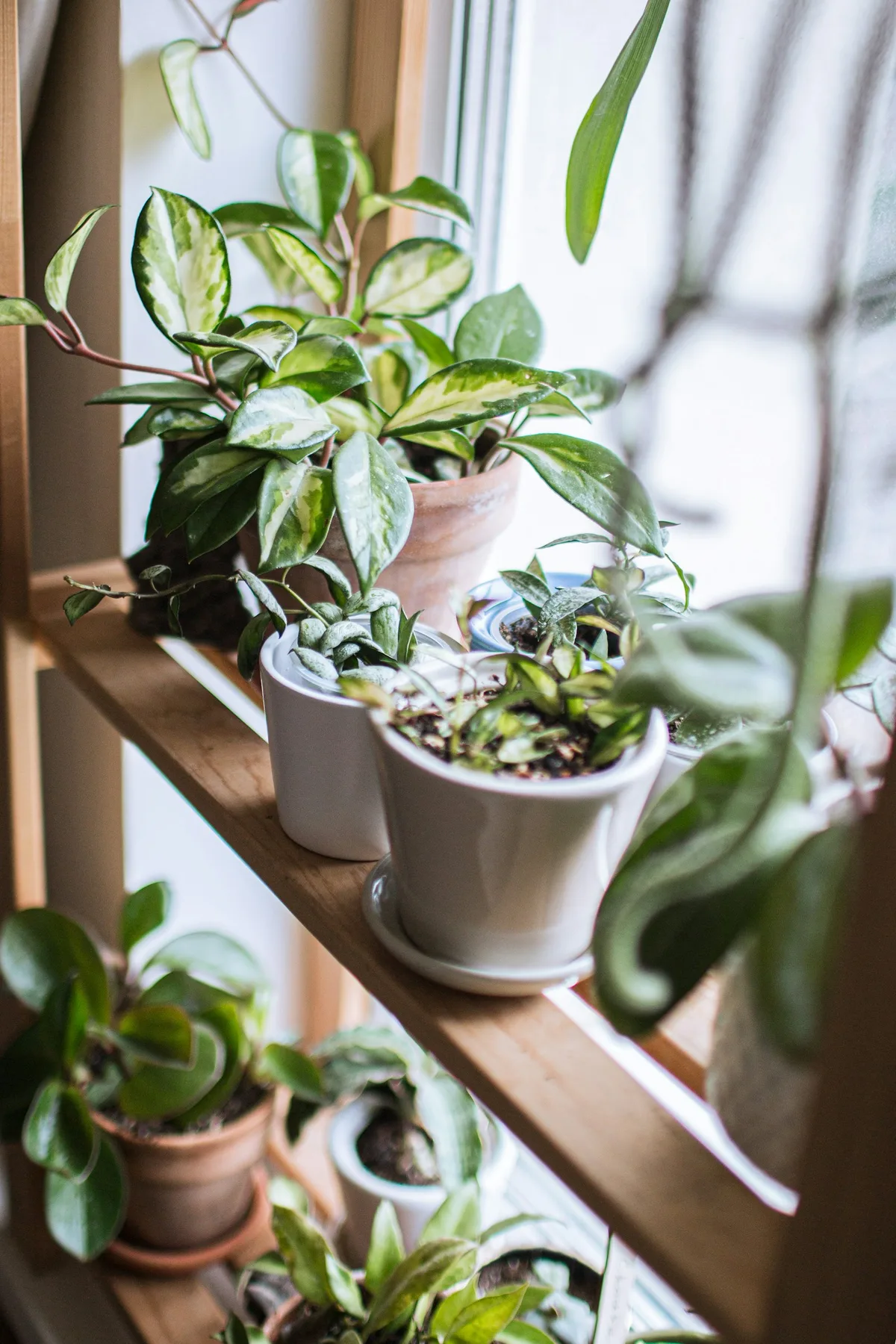
Revisit the windows as the season changes. Outdoor trees, neighboring buildings, curtains, and the shorter useful daylight period can alter which sites work best. A shelf described as bright during one season may receive much less usable light later. Check the leaf position, not just the general brightness of the room.
Moving a plant nearer a suitable window may help, but leave foliage away from cold glass and avoid exposing sensitive plants to drafts. Check what happens when curtains close at night. A pot placed between the curtain and the glass may experience a different temperature from the occupied room. Keep plants clear of frequently opened exterior doors too.
If natural light cannot meet the plant's needs, consider appropriate supplemental lighting with product-specific placement and timing guidance. The houseplant light notebook explains how to compare locations. Avoid making a dramatic move into strong direct sun simply because the previous position became dimmer.
Moisture review: change the decision, then the schedule
When growth slows and usable light decreases, some plants draw water from their pots more slowly. Continuing the old watering interval can leave the root zone persistently wet. That is a reason to inspect more thoughtfully, not a reason to impose the same long dry interval on every species.
Check the growing medium below the surface in a way appropriate to the plant, and compare pot weight where practical. The surface can look dry while the lower medium remains moist. Conversely, a small pot near moving warm air can become dry sooner than the calendar suggests. Let the evidence determine whether water is needed.
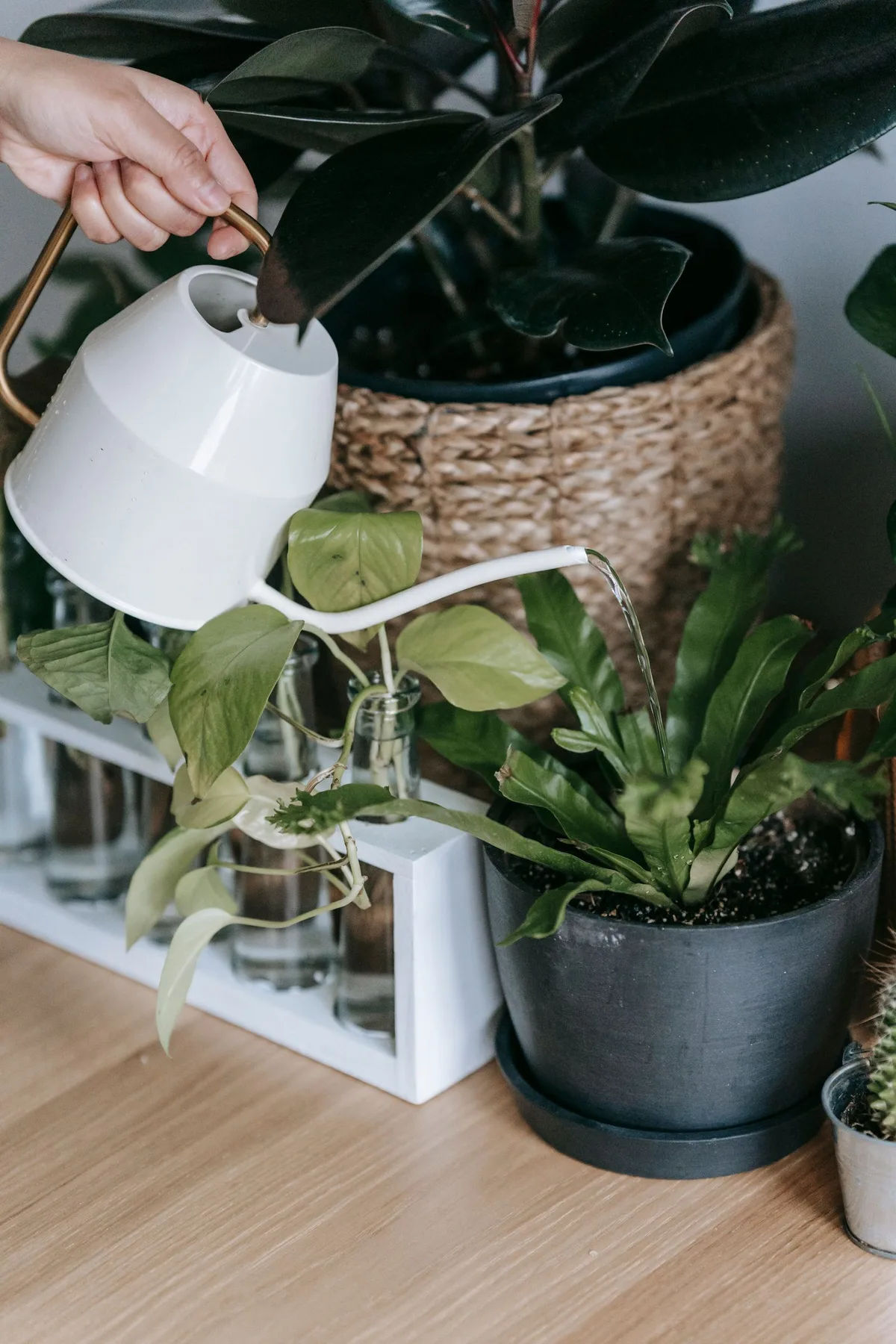
When watering is appropriate, water the root zone effectively and allow excess water to drain. Empty accumulated runoff from saucers or decorative containers. A smaller seasonal need does not automatically mean that every watering should become a tiny surface splash. The indoor watering decision guide helps separate the timing decision from the amount needed to moisten the root zone.
Heating review: check the plant's actual surroundings
Household heating can make a room feel comfortable while creating a difficult pocket beside a vent or radiator. Look for warm air blowing directly across foliage and for pots standing above a heat source. Move the plant to a more suitable location rather than trying to compensate indefinitely with extra water.
Some plants respond poorly to dry indoor air, but crispy tips alone do not prove that humidity is the only issue. Root problems, watering irregularities, and other stresses can produce overlapping symptoms. Review the whole environment before buying equipment. The RHS guide to a poorly houseplant is useful for this broader assessment.
If a humidifier is appropriate, follow its operating and cleaning instructions and consider the room as well as the plant. Avoid persistently wet household surfaces. Occasional misting should not be treated as a dependable way to control the room's humidity. Keep leaves accessible for inspection and give the collection enough space for routine care.
Growth review: decide which jobs can wait
Feeding should follow the plant's growth and the fertilizer directions. A plant producing little new growth generally needs a different approach from an actively growing specimen under appropriate lights. Do not keep adding fertilizer to compensate for insufficient light, and do not diagnose every pale leaf as a nutrient shortage.
Routine repotting can often wait until suitable active growth resumes, especially when the existing container still functions well. However, an actual root or drainage problem deserves assessment when it appears. Waiting for a particular month is not helpful if roots are deteriorating. Identify the issue before deciding whether repotting is the right response.
Remove dead material as needed and inspect beneath it. Avoid combining a large location change, heavy pruning, repotting, and feeding without separate reasons for each job. A quieter maintenance approach makes it easier to see how the plant responds. Keep the seasonal planner focused on necessary decisions rather than filling every week with interventions.
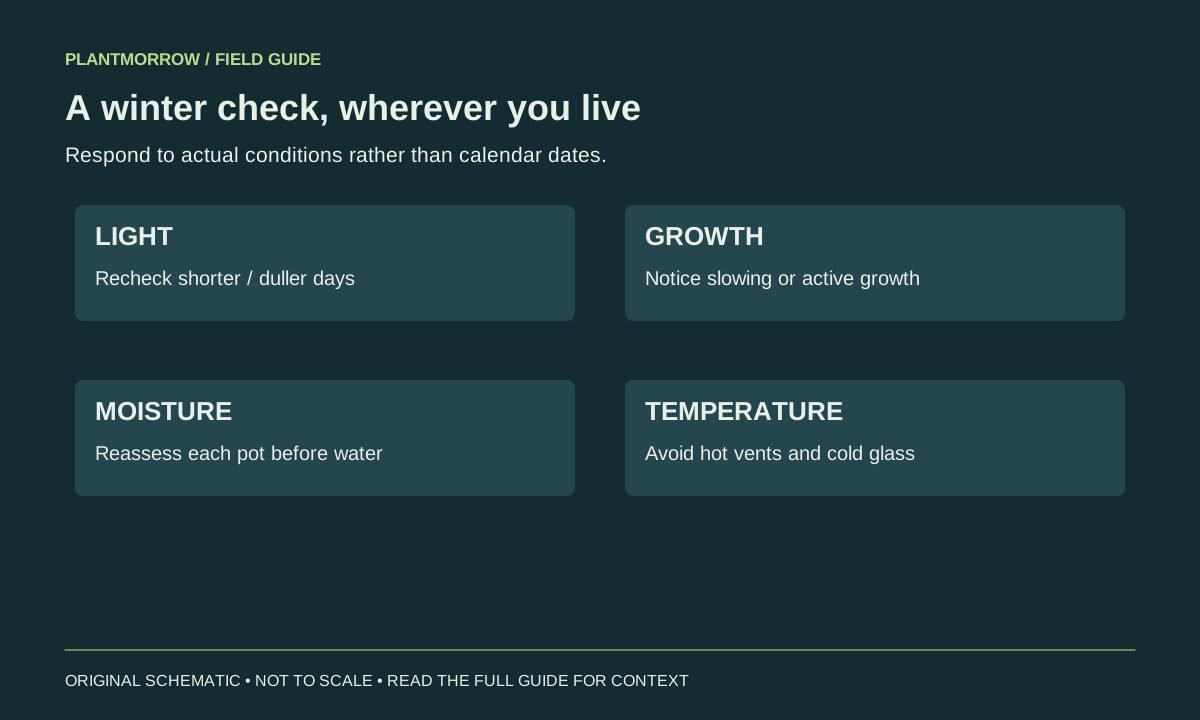
A repeatable weekly round
Choose a regular inspection time and use the same route through the room. This is a checking appointment, not a promise to water every pot. The route makes small changes easier to notice and helps prevent the hidden plant at the back of a shelf from being overlooked.
- Look at new growth and note changes in leaf color, shape, or firmness.
- Check leaf undersides, joints, and nearby surfaces for signs of pests.
- Assess moisture according to each plant's requirements and empty standing runoff.
- Review contact with glass, heating outlets, drafts, and recently moved furniture.
- Write down the few actions taken so that the next inspection has context.
Adjust inspection frequency when conditions demand it. A very small pot or a newly moved plant may need attention between rounds. Equally, repeated checking should not become repeated watering. The value of the round is noticing evidence and taking the appropriate action, including leaving a healthy, adequately moist plant alone.
Two plants, two plans: a hypothetical comparison
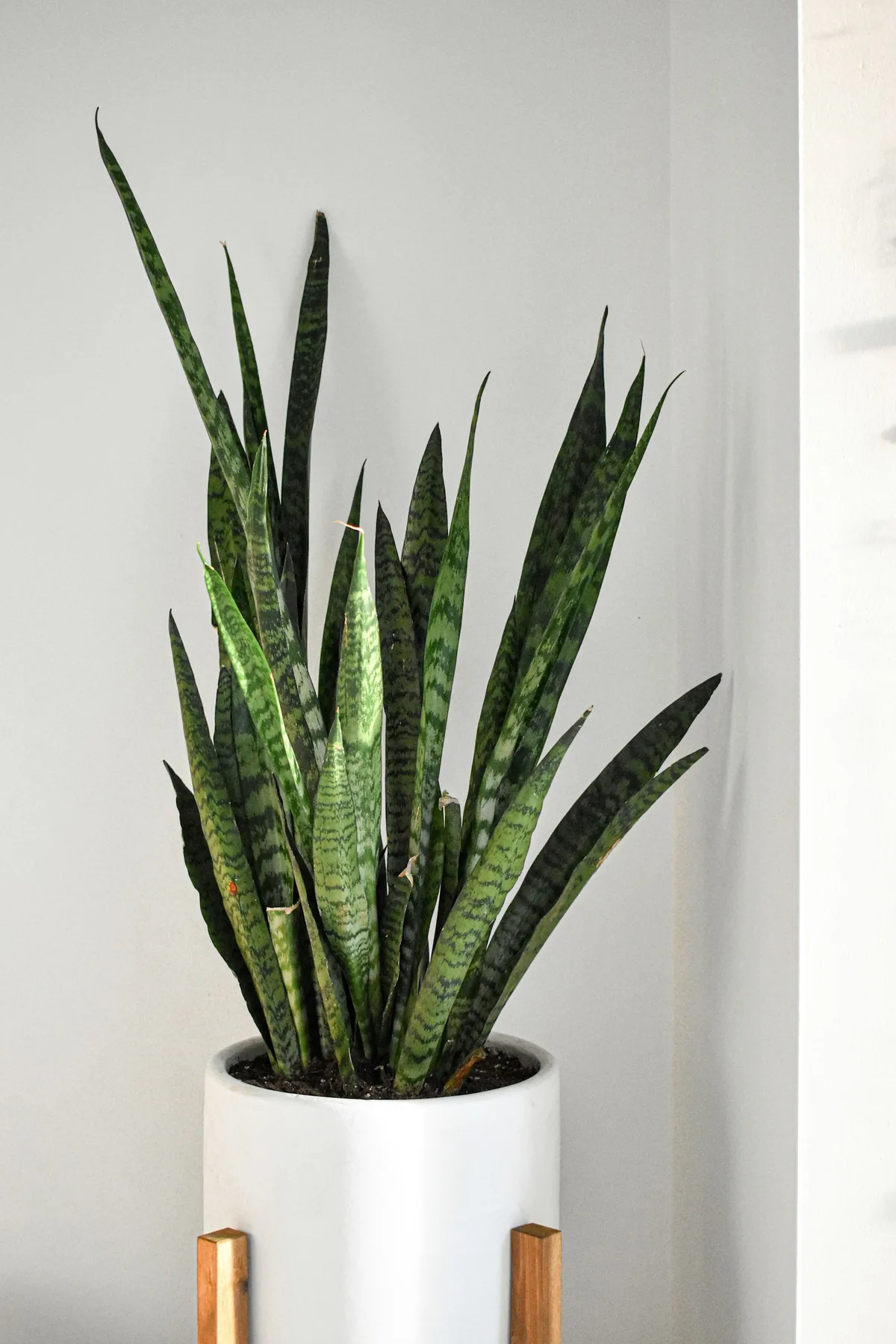
Imagine a snake plant on a cooler, dimmer shelf and a tropical foliage plant beneath a suitable growing light in a warm room. The snake plant's medium stays moist longer than it did during the brighter season. Its owner extends the interval between waterings because repeated checks show that the root zone has not dried sufficiently for that plant.
The second plant continues producing healthy new leaves. Its owner checks moisture regularly, keeps the lamp setup consistent, and reviews feeding against active growth and the product directions. That plant does not automatically receive the snake plant's longer dry interval simply because both share the same outdoor winter.
This is an illustrative scenario, not a trial result or a species-wide prescription. It shows why seasonal care begins with conditions and growth. The meaningful question is what changed for each plant, rather than which calendar instruction should be applied to every pot in the building.
When something looks wrong: use a short triage list
Yellowing leaves: record which leaves are affected and whether the change is spreading. Check moisture and drainage, recent moves, pests, and light. Some leaf turnover can occur, but a continuing pattern deserves investigation. Avoid adding fertilizer before identifying a plausible need.
Drooping with wet medium: do not assume thirst. Check whether the pot has remained wet, whether runoff is trapped, and whether root problems are plausible. The root-rot guide explains the assessment process and why another watering may be the wrong response.
Dry tips or edges: review the watering pattern, root condition, heating exposure, and species requirements together. Trimming a damaged tip may improve appearance, but it does not establish or remove the cause. Keep any trimming tools clean and avoid cutting healthy tissue unnecessarily.
Visible insects or sticky residue: separate the affected plant where practical, identify the problem, and choose appropriate control guidance. Recheck nearby plants. Do not interpret slow winter growth as proof that an insect problem can wait until the brighter season returns.
Before a holiday: leave observations, not a blanket instruction
Prepare a short handover if someone will care for the plants while you are away. Identify the pots, explain where runoff collects, and describe how to assess each plant's need. “Check this pot and water only if the agreed signs are present” is more useful than “water all plants every few days.”
Avoid soaking the collection simply to prepare for an absence. Check each plant first. Keep the planned room conditions reasonably stable, including safe heating and any established light timers. If you are considering a new self-watering device, test its behavior in advance rather than installing it at the door on departure day.
When growth returns: retire the winter assumptions
As local light improves, repeat the same observations. Some pots will begin drying faster; new growth may become more evident. Change the routine as the evidence changes rather than retaining the winter interval until a plant wilts.
Review postponed maintenance, including suitable repotting and feeding, against the plant's condition. Move plants toward stronger exposure gradually where needed. Keep the notes that explain what worked: they provide a useful starting point next season, while leaving room for a different room layout, a larger plant, or a changed heating pattern.
Three seasonal mistakes to leave out of the plan
Avoid moving every plant to the brightest available glass without checking temperature and exposure. Avoid treating a warm room as proof that the roots are using water quickly. Finally, avoid maintaining an old routine merely because it worked last season. These mistakes share the same cause: acting on one visible clue while ignoring the rest of the growing environment.
Replace each shortcut with a specific observation. Check the site, check the medium, and check current growth. Write down the reason for a change so that care remains a series of informed decisions rather than a collection of seasonal rules remembered out of context.
Frequently asked questions
Do all houseplants become dormant in winter?
No. Growth depends on species and conditions, including light and temperature. Some plants slow substantially, while others continue growing in a suitable indoor setup. Observe the plant and consult its requirements. A universal dormancy label can lead to inappropriate watering or feeding decisions.
Should I water with a fixed winter interval?
Use a regular checking routine instead. Seasonal changes can lengthen or shorten drying time depending on the pot and location. A fixed interval may miss both a pot that stays wet and a small container drying beside warm airflow. Inspect the root zone before deciding.
Is every yellow leaf a winter problem?
No. Seasonal conditions may contribute, but yellowing is a symptom with several possible causes. Note its pattern, inspect roots and leaves as appropriate, and review recent changes. A plant that was already declining before the season changed needs more than a new seasonal label.
Can I repot a struggling plant during winter?
Assess why it is struggling first. A functioning pot and healthy roots may not need disturbance, whereas a serious root or drainage problem may justify action. The repotting workshop helps distinguish a routine size change from a necessary response to a specific problem.
Leave each plant with a simple plan
Finish the review with a suitable position, a clear moisture check, and a realistic maintenance routine for each plant. Keep the plan easy to revise. The strongest seasonal habit is to notice changes early and connect them to a sensible action, while allowing stable, healthy plants to continue without unnecessary disturbance.
Read further
Sources & further reading
Selected horticultural references used to inform this guide. Local conditions and species-specific advice still matter.
- Winter Houseplant Tips — University of Minnesota Extension
- How to Help a Poorly Houseplant — RHS
- Before the First Frost: Bringing Your Plants Indoors for Winter — Penn State Extension
Prepared with AI assistance for Plantmorrow. No independent expert review or first-hand growing trial is claimed. Our editorial approach · Suggest a correction.