The right potting mix is the one that gives a particular plant usable moisture, air around its roots and a stable place to grow in the container you actually use. There is no single ideal recipe for every houseplant. A moisture-loving leafy plant, an epiphytic orchid and a drought-adapted succulent can require quite different root environments.
Start with the plant and the pot, then read the bag. Names such as potting soil, indoor compost and growing medium are used differently across markets, while the contents behind those names can vary substantially. This comparison guide helps you interpret ingredients and choose a sensible starting point without turning every repotting session into an elaborate recipe experiment.
Compare the job, not the marketing name
A pot is a limited root environment. Roots cannot explore a large surrounding soil volume to escape a wet pocket or find additional resources. Watering, container size, drainage and the physical structure of the mix work together, so a bag cannot be judged independently of how you intend to use it.
The University of Maryland guide to container growing media explains why container substrates differ from ordinary garden soil. For most indoor potting projects, a reputable medium formulated for containers is a more predictable starting point than scooping soil from a garden bed.
Read the label for intended use, ingredients, added fertilizer and any specific instructions. A seed-starting medium may be designed for a different stage than a long-term container mix. A soil amendment or compost sold for improving garden beds is not automatically a complete growing medium for a houseplant.
Before buying, write down the plant’s identity, the pot size and material, the available light and your usual watering habits. These details help you make a reasoned choice. A complicated ingredient list is not useful if the resulting mix does not fit the conditions of your room.
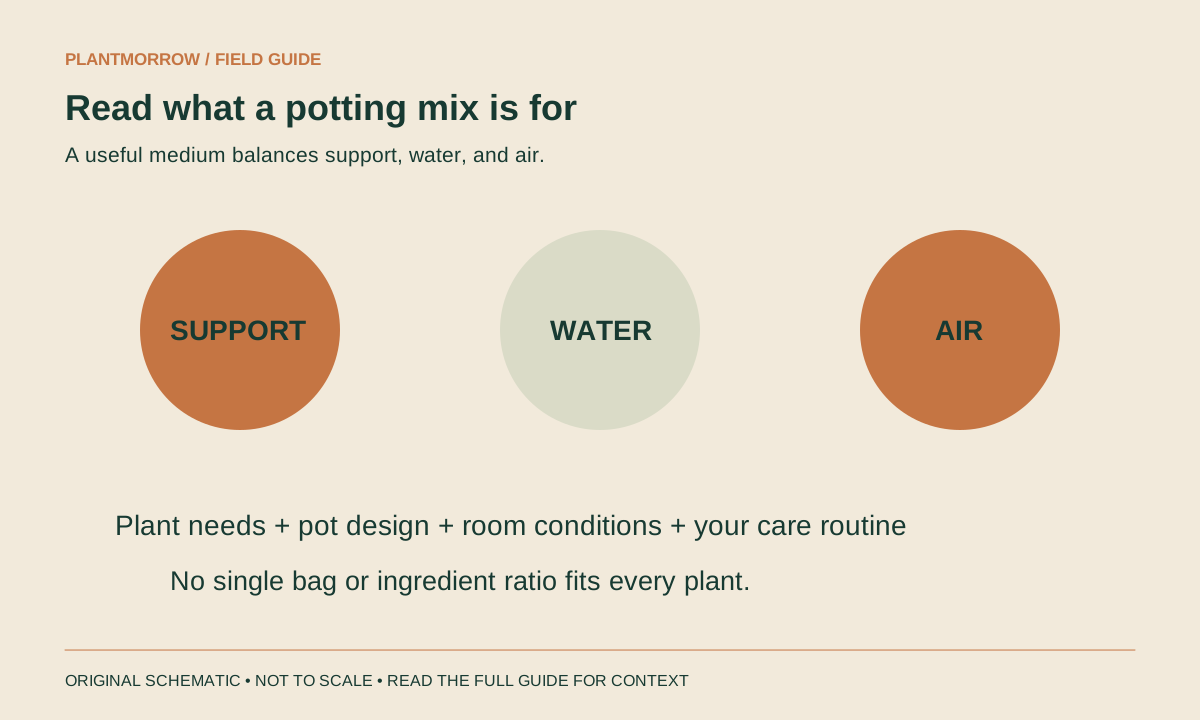
Three requirements that must stay in balance
Moisture storage: the medium must retain some water that the roots can access. A mix that dries almost immediately may be difficult to manage for a plant that needs relatively consistent moisture. However, retaining more water is not always better, especially around a small root system in a large pot.
Air-filled space: roots also need a suitable oxygen environment. A persistently saturated or compacted medium can be problematic even if it looks rich and dark. Adding drainage holes helps water leave the container, but it does not turn any dense material into a well-structured potting medium.
Physical support: the mix should hold the plant securely without being packed into a hard mass. A tall plant that rocks after repotting may need sensible support or a better container arrangement. Compressing the medium heavily to stop movement can create another problem below the surface.
The relative importance of these functions changes with the plant. Use this balance to compare products instead of assuming that a mix described as premium, natural or professional must suit every application. The UConn explanation of potting media provides a useful overview of the underlying functions.
Ingredient desk: what the common materials contribute
| Material | Why it may be included | What to check |
|---|---|---|
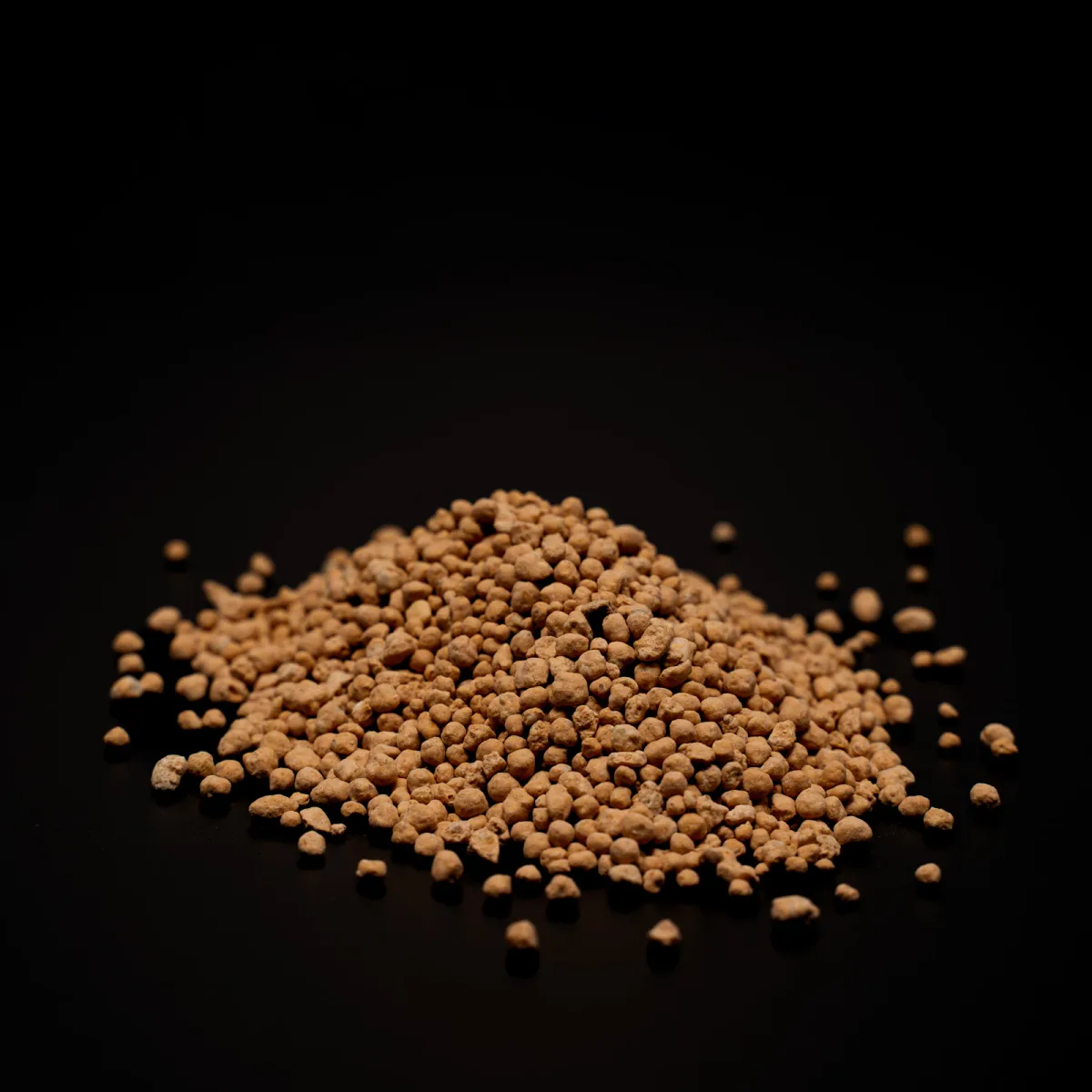
| Coir or peat-based components | Moisture-holding organic structure | How the product is prepared and how it rewets |
| Bark | Coarser structure in suitable mixes | Particle size and the plant’s requirements |
| Perlite or pumice | Changes the balance of air space and water retention | Grade, amount and interaction with the base mix |
| Compost | Organic material and possible nutrients | Quality and whether it is an amendment or a complete mix |
| Fine mineral soil | Included in some formulated products | Whether the overall product is intended for containers |
An ingredient is not a guarantee of a particular result. A handful of coarse material added to a dense base does not automatically create the structure you intended. Particle sizes, proportions and how the ingredients settle matter more than recognizing a fashionable ingredient name.
Handle dry bagged materials carefully. Avoid breathing dust, follow any precautions on the packaging and wash your hands after potting. Keep growing media away from food preparation surfaces. These basic handling habits matter even when a product is sold as organic or natural.
You do not need every ingredient in the table. For a beginner, a suitable formulated mix often reduces uncertainty. Learn how it behaves through several watering cycles before deciding that a custom blend would solve a specific problem.
Match the mix to a useful plant group
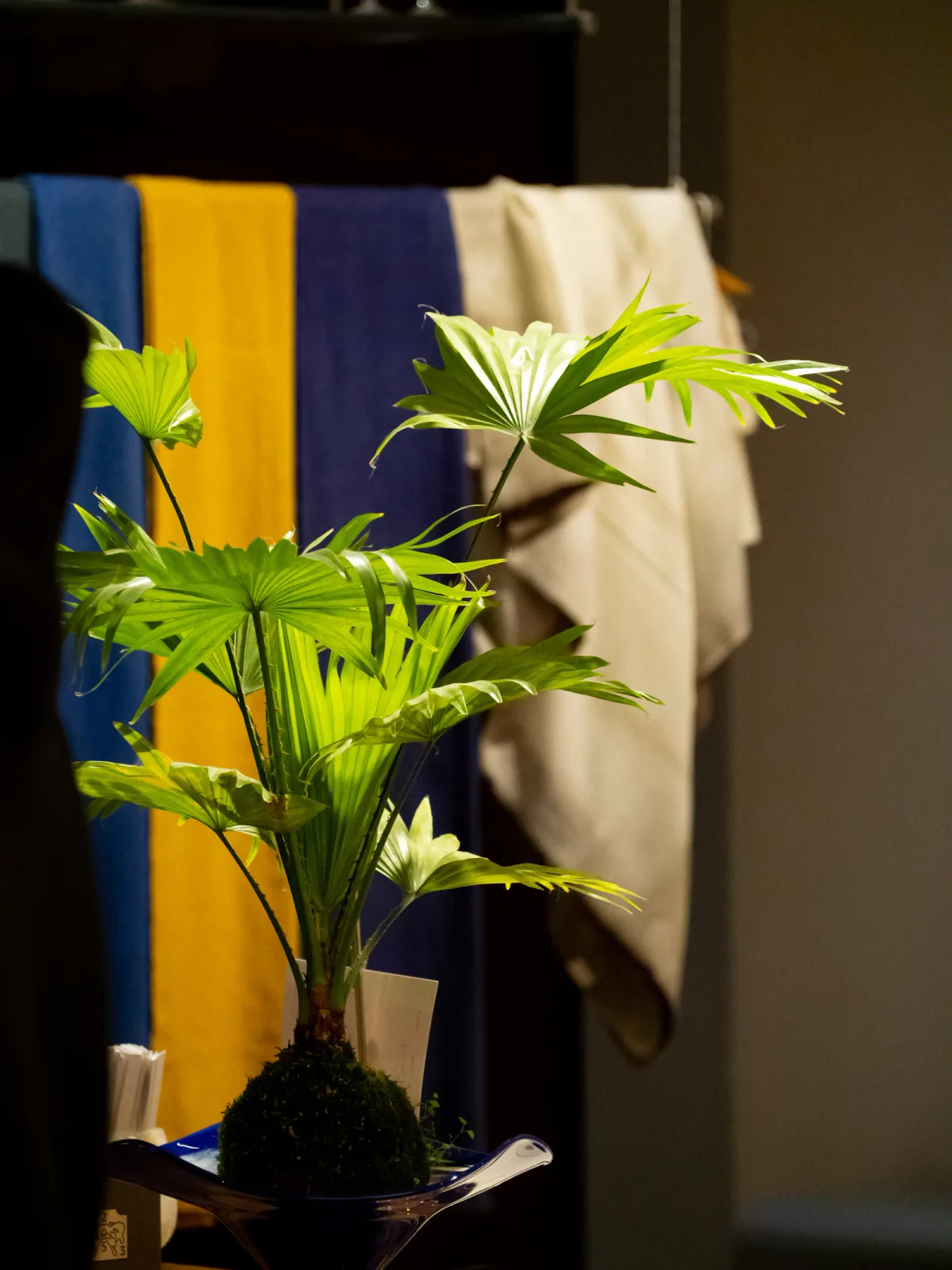
Many ordinary foliage houseplants can begin in an appropriate general-purpose indoor container mix. The important question is how that product behaves in your pot and light conditions, not whether all plants in a broad group have identical needs. Check the species rather than relying entirely on the category label.
Drought-adapted succulents and cacti often need a root environment that dries appropriately between waterings. A labeled cactus or succulent mix can be a starting point, but products vary. Judge the actual texture and drying behavior, and do not assume a label permits watering on an arbitrary schedule.
Epiphytic orchids are a clear example of why one universal houseplant recipe is unhelpful. Their growing media can differ markedly from mixes for typical leafy potted plants. Identify the orchid and choose its appropriate medium instead of burying unfamiliar roots in whatever bag remains from another project.
Seedlings and cuttings also deserve their own choice. Delicate new roots and unrooted stems are not the same as mature plants in a long-term pot. The propagation workshop discusses why the rooting setup should fit that stage rather than simply imitate the parent’s container.
Put the pot and the mix in the same decision
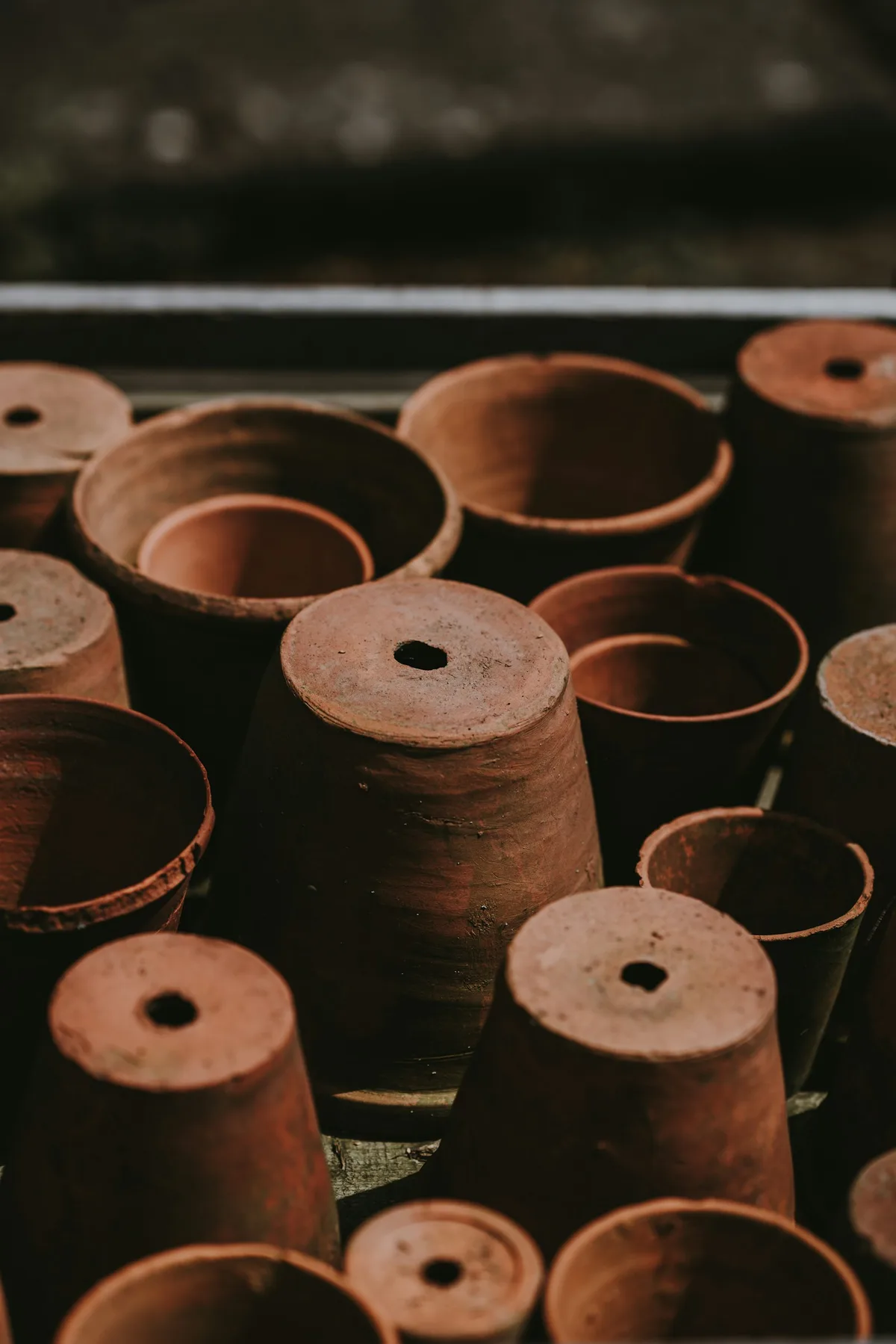
A mix that behaves well in a small terracotta pot can remain wet much longer in a large glazed container under the same indoor conditions. Container material, depth, root volume and exposure all affect how quickly water is lost. Changing the pot without noticing these interactions can make a familiar product seem suddenly unreliable.
Choose a container with appropriate drainage and avoid a large increase in unused wet volume. The Illinois Extension houseplant introduction discusses both container size and drainage. A restrained move to the next suitable pot is usually easier to evaluate than a leap into a decorative pot several sizes larger.
An outer cover pot can be useful if the inner growing pot drains freely and you remove accumulated water. Check the hidden space after watering. A well-chosen medium will not solve a situation where its inner pot is left standing in a reservoir unintentionally.
Do not add a thick layer of stones to the bottom as a substitute for choosing an appropriate container and medium. That arrangement takes up root space and does not provide a reliable correction for a poorly matched substrate. Make the drainage and structure decision across the whole growing volume.
A practical comparison at home
Consider a hypothetical grower with a small leafy plant in a plastic nursery pot on a moderately bright shelf. The existing medium remains wet for a long time, and the grower is considering a larger glazed pot filled with an even more moisture-retentive product. That combination may amplify the original management problem rather than solve it.
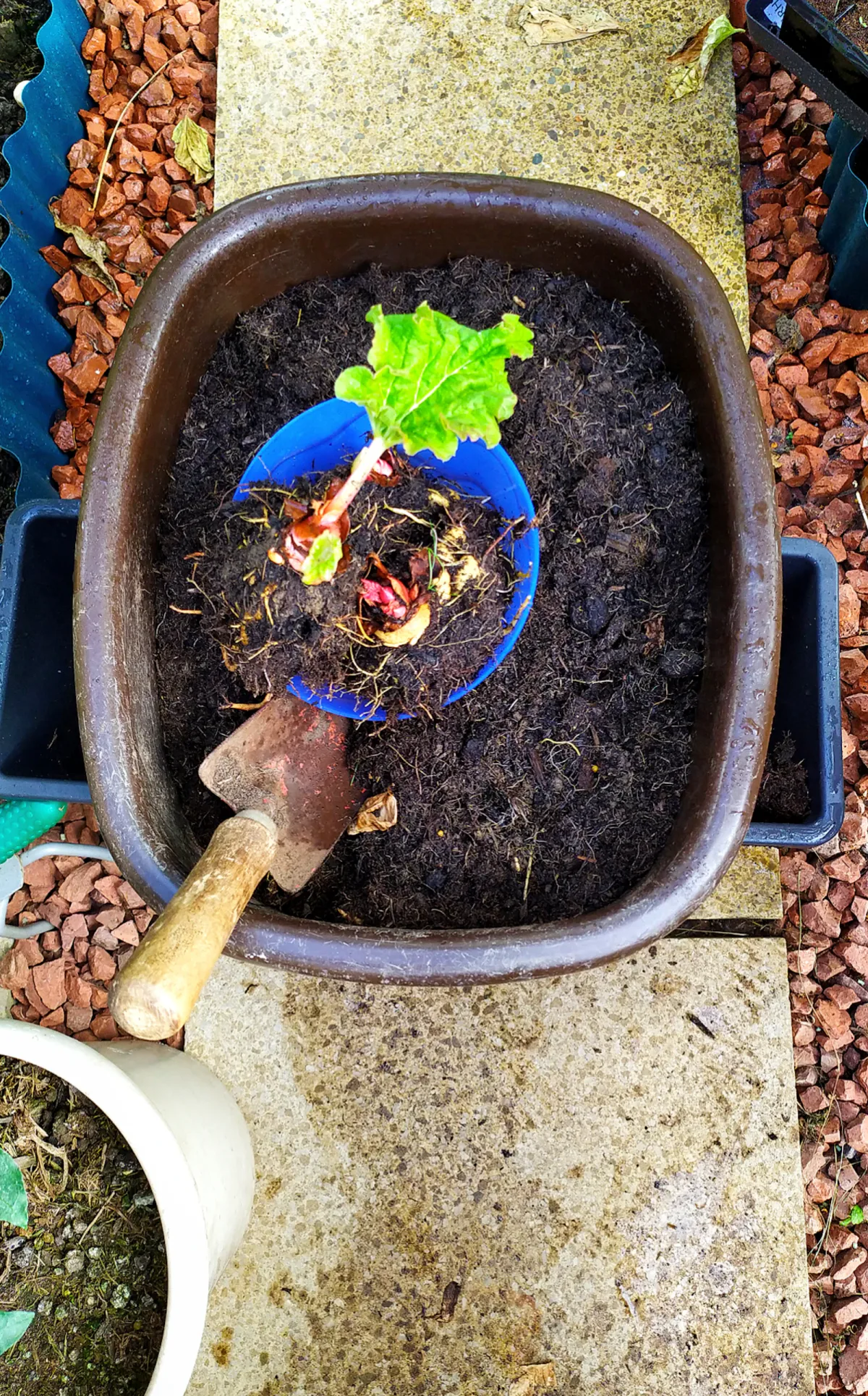
A more informative first step is to inspect the roots, drainage and light before changing everything. If repotting is justified, choose a suitable size and a medium intended for the plant. Record the pot and product, then observe its drying pattern in the actual location without repeatedly adding water just because the surface looks different.
Now compare a fast-drying small pot in a warm, bright room. The solution may involve a different medium balance, a better-matched container or a more workable checking routine. It does not automatically require the same extra-coarse blend that another grower recommends for a cool apartment.
These examples are decision exercises, not tested recipes. They show why environmental context belongs in the choice. Use the watering guide and pot selection guide to connect the medium with how the whole setup will be maintained.
Inspect an old mix before replacing it
Look for changes in structure and behavior rather than declaring every mix expired on the same date. Does water repeatedly bypass the root ball? Has the material settled or compacted? Are roots filling the space, or is the plant small within a large volume that remains wet? Each observation points toward a different decision.
Some dry organic media are difficult to rewet evenly. Water running quickly down the side of a pot does not necessarily mean the whole root ball has been moistened. Check more than the visible surface and investigate the potting setup instead of assuming that rapid drainage proves ideal conditions.
Keep leftover medium clean, dry enough for appropriate storage and protected from contamination according to the packaging. Do not pour unknown leftovers from a diseased plant back into a bag of new material. Store labels or photograph the bag so you can identify what you used later.
Repot when the plant’s condition and growing environment justify it. Changing the medium is an intervention, not a cure for every yellow leaf or slow week. If the plant has a root problem, investigate that specifically before treating a new bag of potting mix as a guaranteed reset.
A short buying checklist
- Identify the plant and any special root-environment requirements.
- Confirm that the product is a growing medium for containers, not just a soil amendment.
- Read the ingredients and whether nutrients have already been added.
- Match moisture retention to the pot, root volume, light and checking routine.
- Buy a manageable amount from a source with sensible storage conditions.
- Keep the product label and make a note of its first use.
The best buying decision is often the least complicated product that clearly fits the job. Add ingredients only when you can explain which behavior you want to change and how you will evaluate the result. Otherwise, complexity can conceal the problem rather than improve the root environment.
Keep a small trial interpretable
If you are changing from a familiar mix to a new one, start with a manageable plant that genuinely needs repotting. Do not repot an entire stable collection simply to compare products. A restrained introduction gives you a chance to learn the new medium’s behavior without creating many simultaneous care changes.
Keep the bag label or a photograph of it with the repotting date. Record the pot size, material and where the plant is standing. These details make a later observation useful: a medium that stayed moist in a cool plastic pot cannot be compared fairly with one used in a smaller clay pot beside a warm window.
At the first few watering checks, notice whether moisture is distributed reasonably through the root ball and whether the plant remains stable. Resist the urge to declare a winner from a single fast or slow drying cycle. Changes in room conditions and the disturbance of repotting can affect what you see.
If the setup is difficult to maintain, identify the specific mismatch before adding more ingredients. You may need to rethink the pot, the location or the checking routine rather than replacing the medium again. A useful trial ends with a clearer care decision, not necessarily a more complicated recipe.
Questions from the bagged-soil aisle
Is potting soil different from potting mix?
The names are not used consistently. Some products called potting soil contain little or no mineral soil, while local markets use other terms entirely. Read the intended use and ingredients. The label’s description of what the product does is more informative than the name alone.
Can I use the same mix for every plant?
It may suit several ordinary houseplants, but it should not become a universal rule. Orchids, succulents, seedlings and other specialized situations can need different media. Evaluate each plant group and the conditions in its container before reusing a familiar product automatically.
Does extra perlite always make a mix better?
No. It changes the physical balance, but the result depends on the base material, particle sizes and proportion. A mix can become too difficult to keep appropriately moist for the plant and your routine. Make a targeted change rather than adding ingredients as a general badge of quality.
Should I fertilize immediately after repotting?
Read the medium’s label first: some products already contain fertilizer. The plant’s condition and growth stage also matter. Follow the relevant product instructions and the guidance in when to fertilize plants, rather than assuming fresh medium must receive an additional feed straight away.
Make one choice you can evaluate
Choose a suitable medium, record its name and pair it with a sensible pot. Over the following watering cycles, watch how the whole root environment behaves. A useful mix is one you can maintain consistently for that plant; it does not need to be the most elaborate recipe on your shelf.
Read further
Sources & further reading
Selected horticultural references used to inform this guide. Local conditions and species-specific advice still matter.
- Growing Media (Potting Soil) for Containers — University of Maryland Extension
- Potting Media — University of Connecticut
- Get Started: Houseplants — Illinois Extension
Prepared with AI assistance for Plantmorrow. No independent expert review or first-hand growing trial is claimed. Our editorial approach · Suggest a correction.