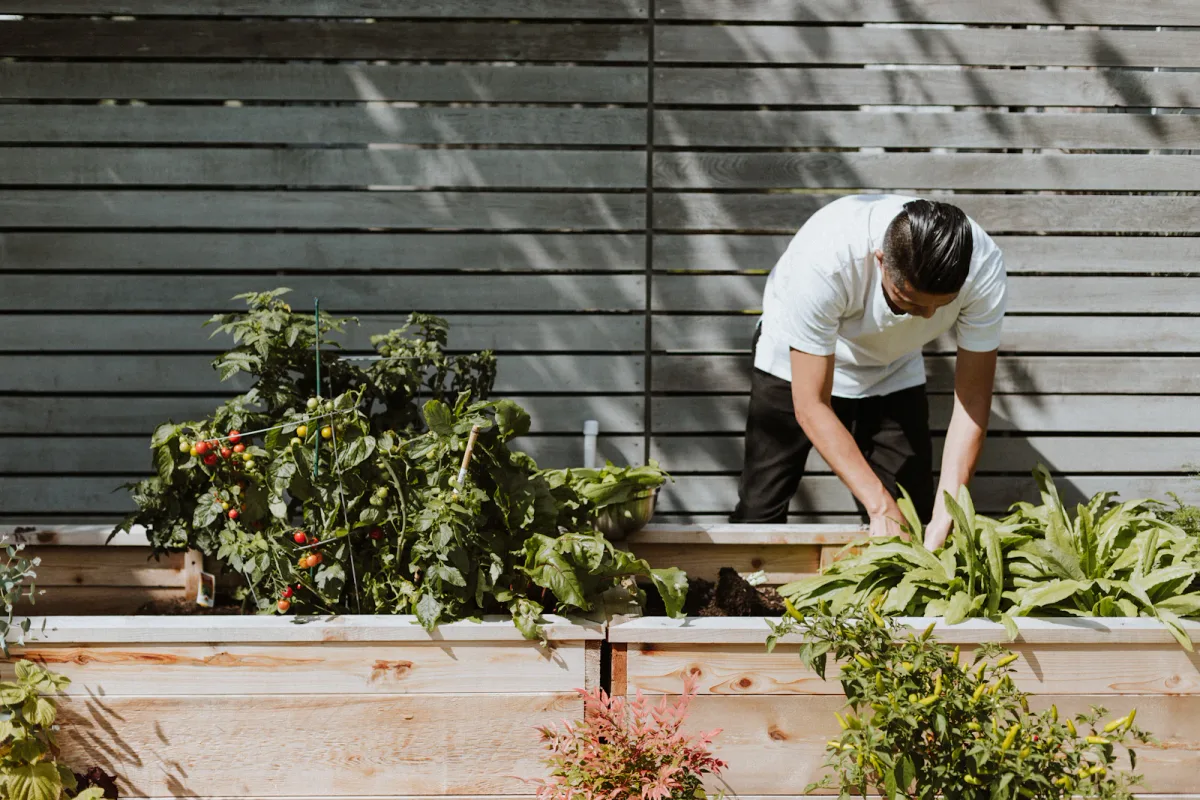
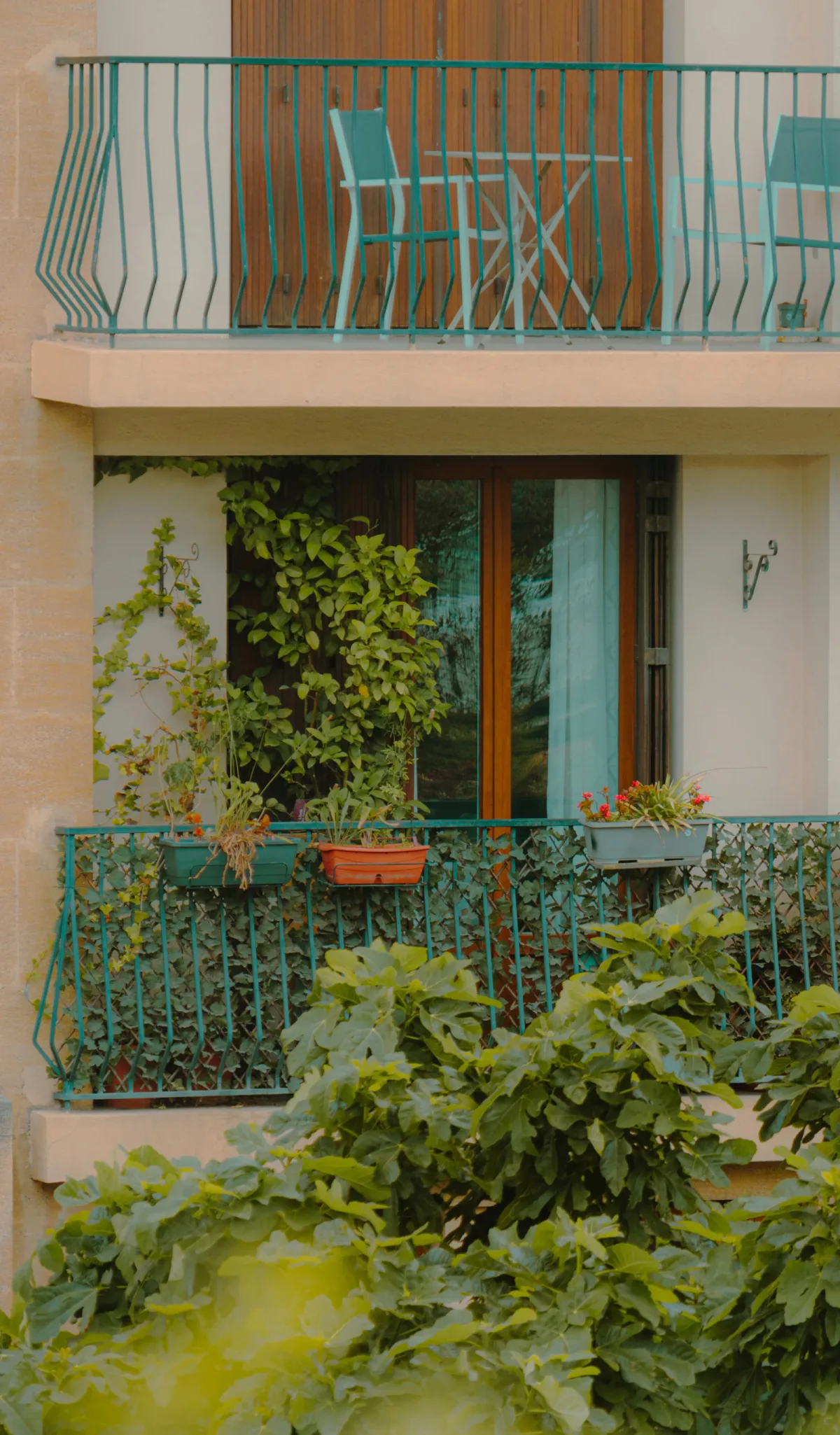
A productive balcony garden begins with a safe, usable layout and plants matched to the balcony's actual light and exposure. Confirm what the building permits, understand the weight and drainage constraints, and keep a clear route through the space before choosing containers. Then grow a small selection of crops you will regularly harvest rather than filling every available corner.
The goal can be modest and still worthwhile: fresh herbs beside the kitchen, a few salads or a compact fruiting crop in a suitable sunny position. “Productive” means useful for your household and manageable in your building. It does not require a balcony to become a miniature farm or an obstacle course of pots.
Establish the boundary before drawing the garden
Ask the building manager, owner or relevant professional what is allowed on your specific balcony. Existing rules may affect loading, drainage, external attachments, appearance and access. Do not estimate structural capacity by looking at the concrete, comparing neighboring balconies or reading a generic load figure online.
The RHS guidance on roof gardens and balconies makes structural suitability an early planning issue. Get building-specific advice before adding substantial planters, reservoirs, shelving or structures. The weight of wet growing medium and containers matters, not merely the empty pot you carry home.
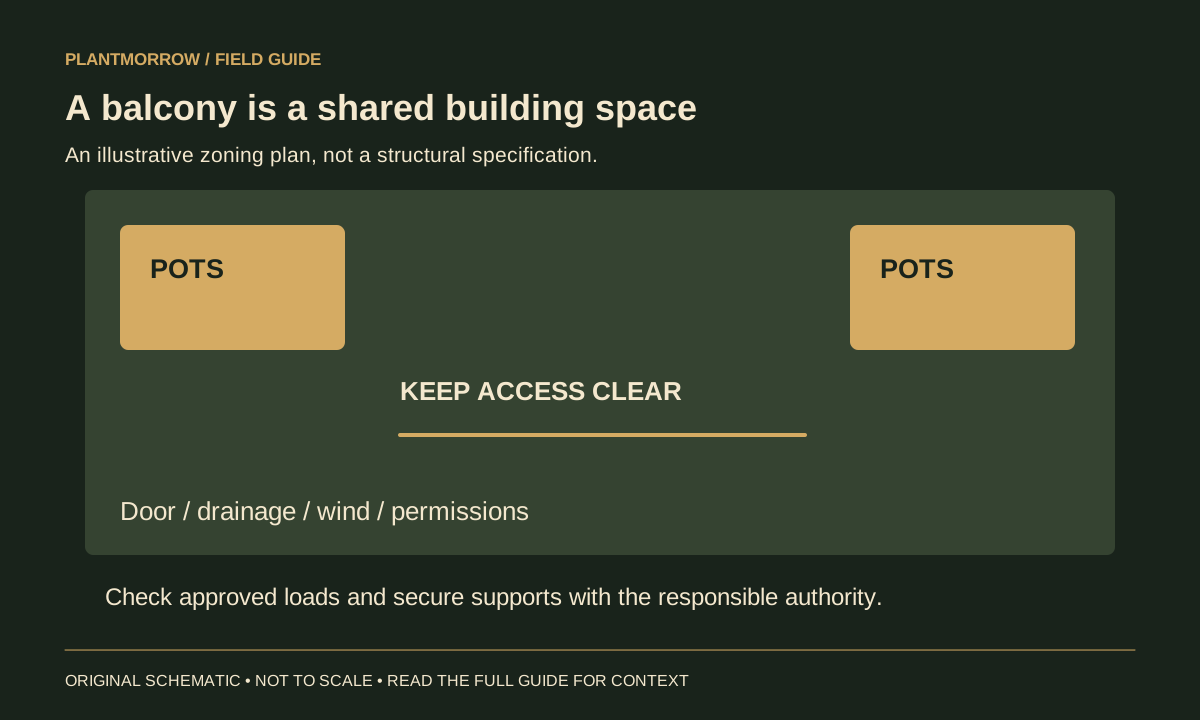
Keep doors, escape routes, ventilation openings and drainage points usable. Do not hang a planter outside a railing or fasten a trellis to the building without appropriate permission and approved support. If those conditions cannot be established, simplify the project rather than treating gardening enthusiasm as a substitute for a safe installation.
Map the balcony in three dimensions
Measure the usable floor, door swing and routes between the door and any existing seating. Add the mature spread of plants, not only their container bases. Leaves and supports can occupy the same space your shoulder or watering can needs to pass through.
Observe direct sun at several times of day. A balcony may have a bright outer edge and a much darker area behind a roof or side wall. Check the light at the height where plants will actually sit, because a railing can shade a low pot while a higher shelf receives a different pattern.
Notice wind and reflected heat. An exposed corner can dry pots quickly, while a wall may store heat or redirect gusts. These are growing conditions to work with, not merely uncomfortable weather events. Repeat observations when the season changes rather than assuming one pleasant afternoon represents the whole year.
Map practical services as well: water supply, drainage route, a place for a small tool kit and somewhere to put harvested leaves. If you must carry water through the home, rehearse the route with a manageable container. The convenience of that route will shape the size of a garden you can sustain.
Build a layout around access, not pot count
Choose one principal growing edge or corner instead of distributing small obstacles everywhere. A coherent group can leave more useful space than scattered individual pots. The arrangement should let you reach the growing medium, inspect leaves and remove a plant without dismantling the entire collection.
Separate the growing zone from the route used to carry water and sit down. Reserve space for mature growth and for your hands to work. A balcony that looks generously open immediately after planting can become cramped once plants branch, trail or fill a support.
Think vertically only after checking the support and access implications. A properly permitted shelf can be useful, but its lower plants may become shaded, its upper containers may be difficult to water, and the whole structure must remain stable. Stacking pots simply to increase the count is not automatically an efficient use of space.
| Growing situation | Possible starting direction | Question to resolve first |
|---|---|---|
| Sunny, sheltered interior edge | A compact fruiting crop in a suitable container | Is there enough root space and a safe support? |
| Bright position with less direct sun | Seasonally suitable leafy crops | Is the available light adequate for that crop? |
| Exposed windy corner | Lower-growing plants in secure containers | Can the arrangement stay stable without unauthorized attachments? |
| Narrow space beside a frequently used door | A very small, reachable herb collection elsewhere | Can the access route remain completely usable? |
Select crops by the harvest you want
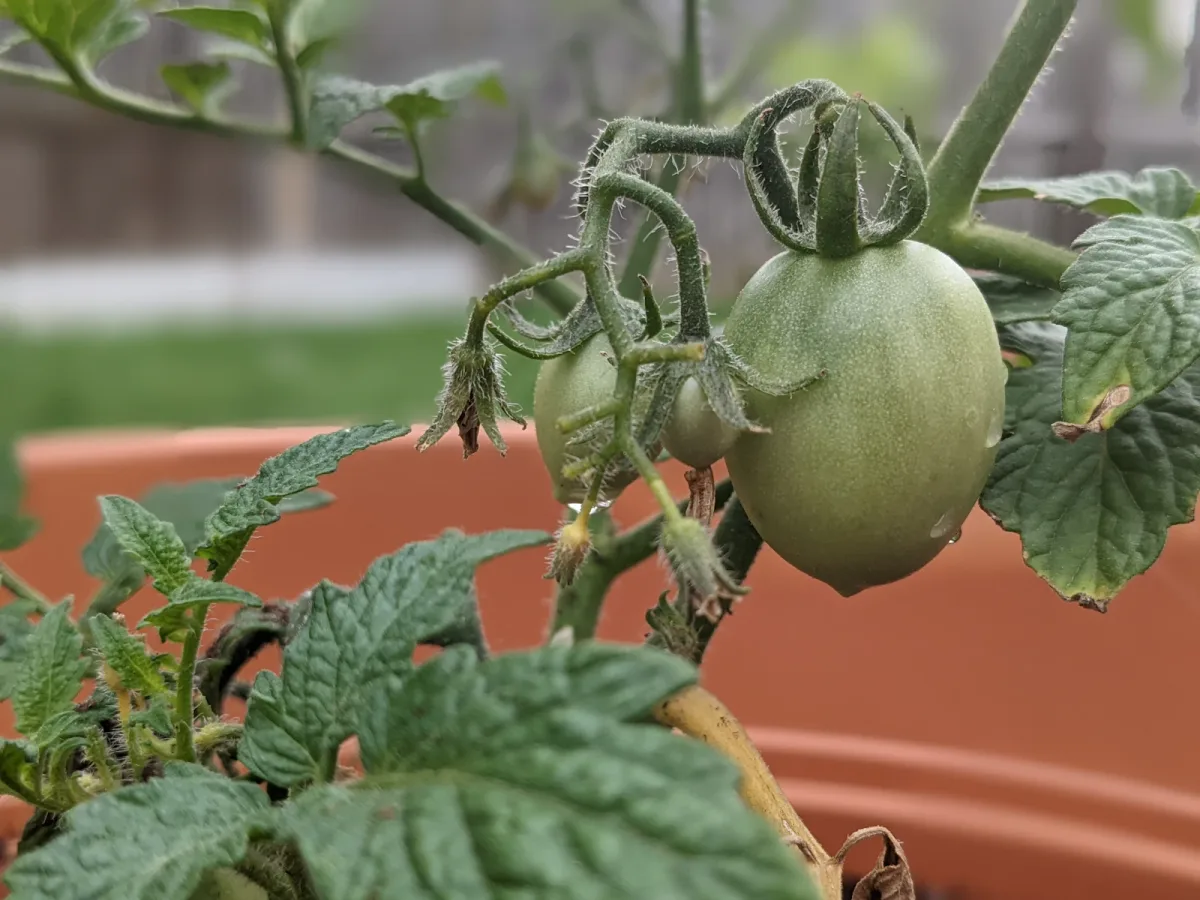
Start with the foods you use in small fresh quantities. Herbs and leafy greens can be valuable even when the growing space is limited. A compact tomato or pepper can be worthwhile in a suitably sunny, warm location, but it represents a longer commitment of root volume, support and watering attention.
Read the mature dimensions and growth habit of the named cultivar. A small fruit does not guarantee a small plant. “Dwarf,” “bush” or “container suitable” can help narrow a search, but those descriptions still need to be checked against the actual space and recommended care.
Choose a mix of tasks you can perform rather than a collection selected only for appearance. Someone who enjoys regular leaf harvesting may prefer a different planting from someone who wants one larger seasonal crop. The field cards in vegetables to grow in containers help compare those commitments.
The RHS balcony-edibles article highlights the practical limits of storage, wind, space and transport as well as crop choice. Its useful lesson is to simplify around your own conditions. Do not treat photographs of a show balcony as a list of plants that every apartment can accommodate.
Choose containers as part of the system
Use appropriate growing containers with functional drainage and enough room for the selected crops. A larger pot can offer more root space and a greater moisture reserve, but it also carries more wet weight. The right choice must satisfy both the plant's needs and the balcony's confirmed limits.
Avoid filling ordinary containers with dense garden soil merely because it is available. Select an appropriate container medium and account for any nutrients already included. For more detail about the growing environment, see choosing a potting mix.
Plan where drain water will go. Water should not fall onto people, stain neighboring property or remain trapped where it causes damage. A saucer may protect a surface temporarily but can also hold unwanted water around roots. Understand how the chosen pot, tray or self-watering system is meant to function before planting.
Keep the arrangement inspectable. If a container is pushed against a wall, leave the access needed to check the back of the plant and the drainage area. Do not assume that a heavy pot can easily be moved later, especially once supports and foliage connect it to nearby structures.
Design the watering route before the hot week
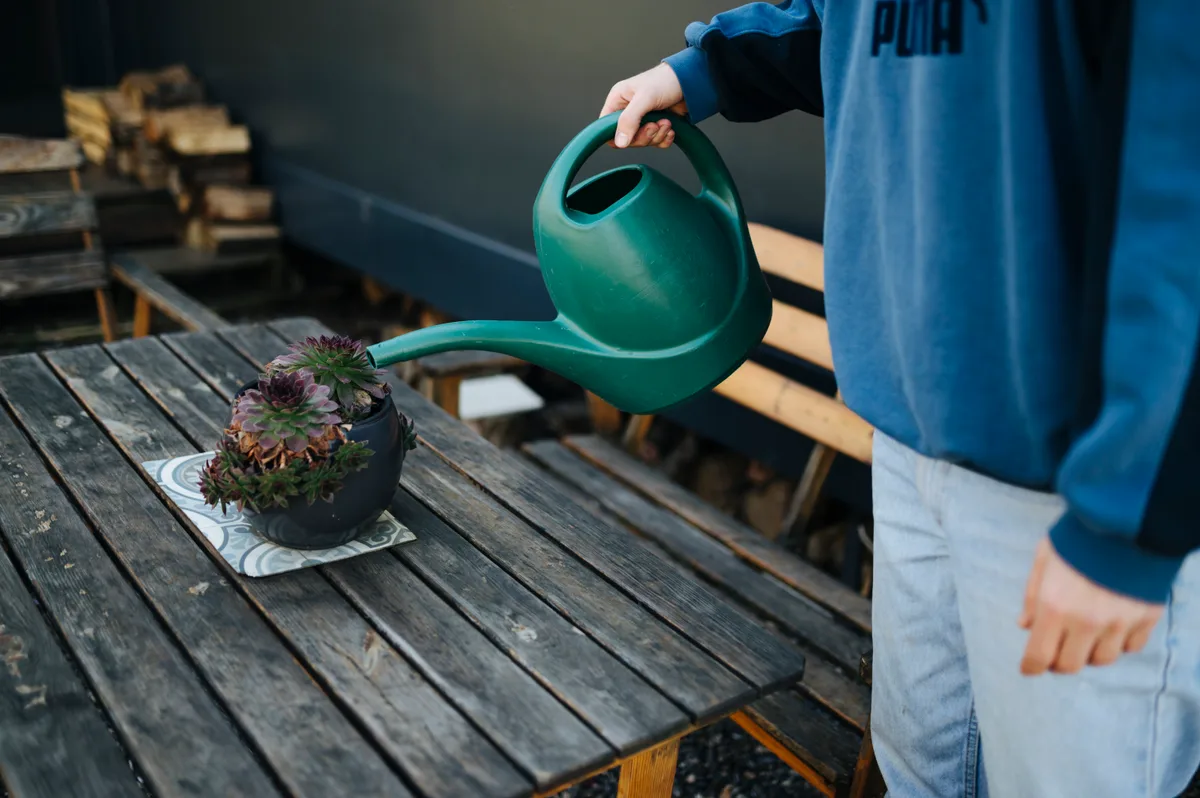
Water access is a defining constraint of elevated container growing. Decide how much you can comfortably carry and whether several small trips are more practical than one heavy vessel. Protect indoor surfaces along the route and store watering equipment where it does not block access.
Check moisture at the growing medium rather than applying one fixed interval to the entire balcony. Exposure, container size, plant growth and weather all change water use. A sheltered pot and a wind-exposed pot can behave differently even when they contain the same crop.
The University of Maryland container guide points out that containers and their contents can become substantially heavy and that convenient water access matters. Those facts are reasons to plan a workable system; they are not permission to calculate an unverified balcony load yourself.
For an absence, arrange a care plan before plants become established. A properly installed irrigation or self-watering system may be useful, but test its actual operation and drainage rather than expecting a newly purchased device to solve every problem. A reliable helper also needs instructions specific to the pots, not simply “water everything daily.”
Use ordinary care visits to inspect the plants. Look at new growth, the underside of a few leaves and the stability of supports. A balcony does not exclude pests, and treatments still require appropriate identification and safe, labeled use. Do not spray above people or property below or assume that homemade mixtures are harmless.
Work with wind instead of building an improvised sail
Position lower-growing crops in the most exposed safe locations and reserve sheltered positions for plants that need them. This is a planning preference, not a guarantee that any short plant tolerates severe exposure. Observe the actual wind pattern and be willing to leave an unsuitable corner unplanted.
Tall supports, dense screens and large foliage can catch wind. Do not install a windbreak or attach a structure without understanding its building-specific requirements. An installation intended to protect plants can create a more serious problem if it places an unapproved load on a railing or mounting point.
Check supports and container stability as growth changes. A plant that was balanced when purchased can develop a different outline as it branches or carries fruit. Keep access for adjustment, and take appropriate action before severe weather rather than waiting until a pot is already leaning.
Phase the garden instead of buying it all at once
First phase: observe and confirm. Establish the rules, light, exposure, water route and usable space. This phase can be productive without a single plant purchase. Keep a simple sketch that records constraints rather than an idealized image of the finished garden.
Second phase: test a small planting. Choose a few compatible projects in appropriate containers and position them inside the agreed growing zone. Test drainage and everyday access while the plants are still manageable. If the arrangement is awkward now, more growth is unlikely to make it easier.
Third phase: review at maturity. Compare actual leaf spread, watering effort and harvest use with your expectations. Identify one clear improvement before expanding. An unused patch of floor may be valuable working room rather than a gap that needs another pot.
Fourth phase: plan the next season. Some crops finish, some plants need protection, and the available light changes. Use your local growing calendar and crop requirements rather than a universal month. Plan how used medium, plant material and equipment will be handled without obstructing shared spaces.
A hypothetical compact-balcony plan
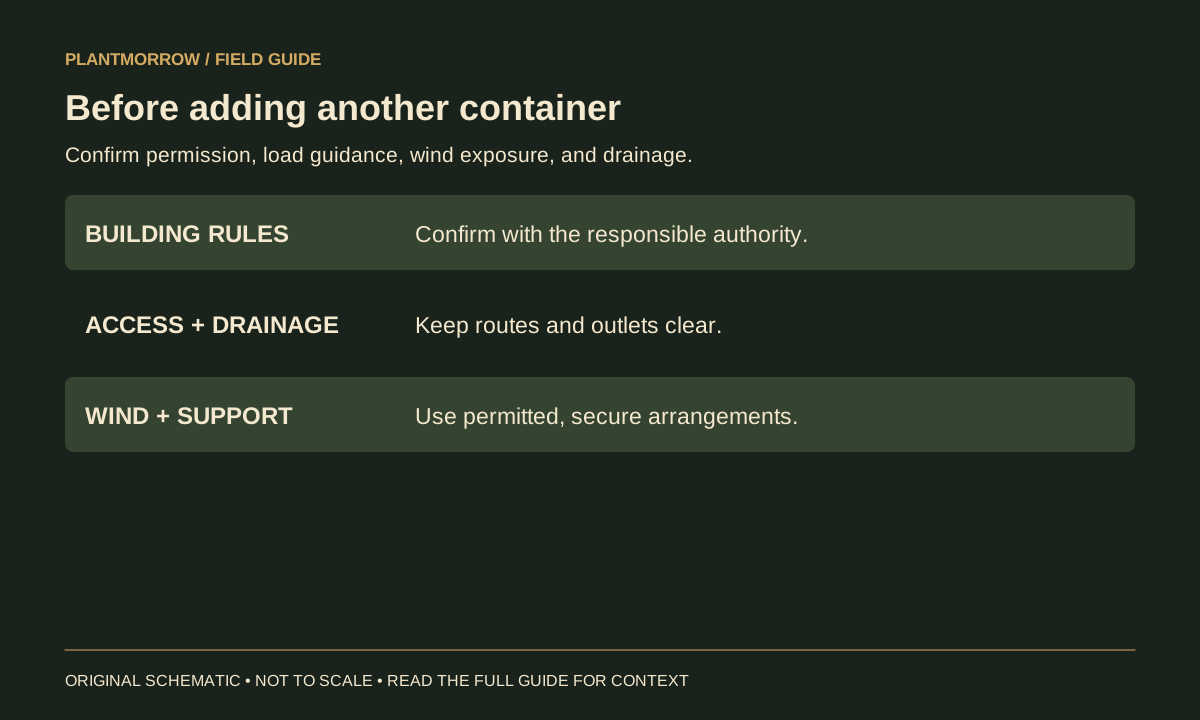
Imagine a balcony whose building-specific conditions permit a small group of containers along one interior edge. The gardener keeps the door route clear, chooses two separate culinary herb pots and one suitable seasonal leafy planting, and leaves a reachable space for a watering can. This is an illustrative arrangement, not a structural approval or a required crop combination.
After observing a full growing cycle, the gardener might replace an unused herb, adjust a pot's position or consider a compact fruiting crop if the light and confirmed loading allowance support it. Expansion follows an identified opportunity, not the number of appealing plants available at a garden center.
For a herb-centered version, use the decision process in growing fresh herbs in small spaces. The benefit of a small collection is that each plant remains visible, reachable and useful. That is a stronger basis for productivity than maximizing the number of containers in a photograph.
Leave room for an ordinary day
Before calling the layout finished, carry the watering equipment through it, open the door fully and reach the back of each container. Sit down if the balcony also serves as a resting space. These ordinary movements can reveal a problem that a top-down drawing misses.
Plan for routine mess as well. Fallen leaves, spilled growing medium and harvest trimmings need a convenient collection point and an appropriate disposal route. Check that a shared drain remains clear without disturbing building components. A productive garden is easier to maintain when cleaning it does not require moving every heavy pot or taking equipment through a crowded doorway.
Finally, decide who will act if the weather changes while you are away. A clear, modest arrangement is easier for a helper to inspect than an intricate structure whose safe use only its owner understands.
Frequently asked questions
How many pots can my balcony hold?
There is no responsible universal answer. Capacity depends on the specific structure, its condition, permitted use and how loads are arranged. Obtain building-specific guidance and include the weight of wet contents, plants and equipment rather than counting empty pots.
Can I grow vegetables without direct sun?
Some leafy crops may be practical with less sun than fruiting crops, but a deeply shaded balcony is a different situation. Observe the actual light and choose accordingly. A clear view of the sky does not automatically mean there is enough usable light for every edible plant.
Are railing planters the best space-saving option?
Not automatically. They require permission, suitable support and a safe installation that cannot drop containers or water onto people below. Interior-side freestanding containers may be simpler where allowed, but they also need to satisfy the building's requirements.
What should I do before buying plants?
Confirm the rules, map the light and measure access. Rehearse carrying water and identify a safe drainage route. Then choose a small number of crops for those conditions and select appropriate containers, leaving room for both people and mature plants.
Read further
Sources & further reading
Selected horticultural references used to inform this guide. Local conditions and species-specific advice still matter.
Prepared with AI assistance for Plantmorrow. No independent expert review or first-hand growing trial is claimed. Our editorial approach · Suggest a correction.