Yellow leaves tell you that something has changed, but they do not identify the cause. A dry root ball, persistently wet compost, unsuitable light, a cold draft and ordinary leaf ageing can all produce yellow foliage. Before adding water or fertilizer, record which leaves are changing, check the pot and compare the plant's recent conditions with its normal routine.
The useful question is not simply, “Why is this leaf yellow?” It is, “What evidence would make one explanation more likely than another?” This observation notebook gives you a practical way to investigate without changing everything at once or promising that an old leaf will become green again.
Entry one: map the yellowing before you intervene
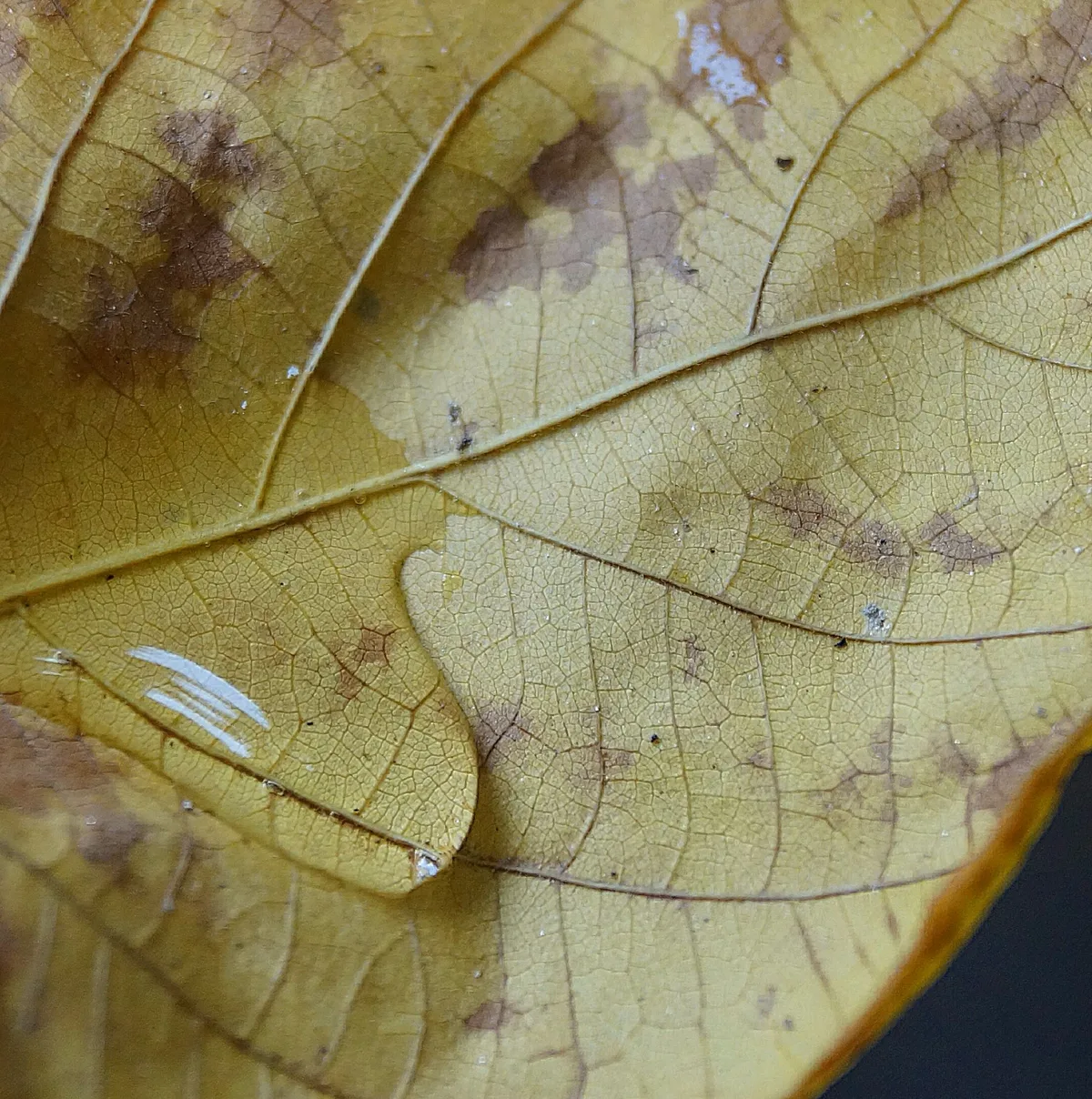
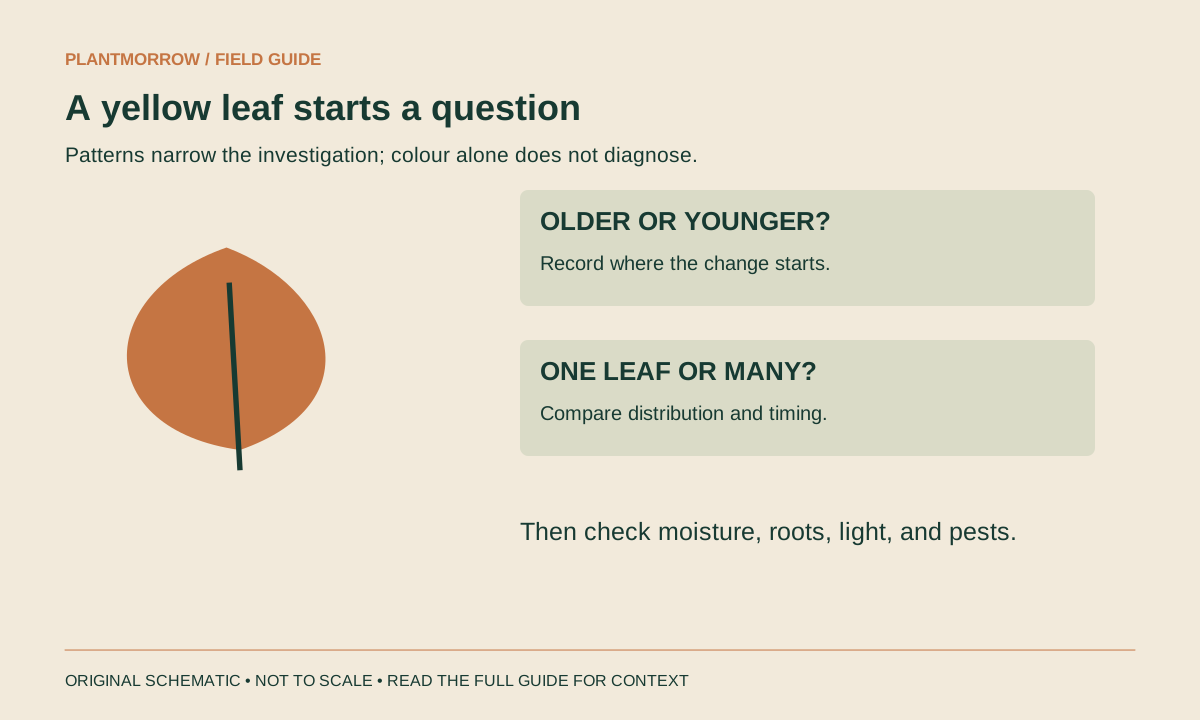
Look at the whole plant in daylight. Identify whether the affected leaves are the oldest ones near the base, the newest growth, scattered leaves throughout the canopy or the side facing a window. Describe what you see rather than naming a disease: uniformly pale, yellow between greener veins, yellow with dry edges, or yellow surrounding a damaged patch.
Photograph the plant from the same angle and take one close view. Keep a healthy leaf in the photograph when possible so that the colour comparison is meaningful. Phone cameras adjust exposure automatically, so a sequence of pictures is most useful when the light and background stay similar.
Write down the approximate number of affected leaves and the date. One old lower leaf changing while the growing tips remain healthy deserves a different response from several leaves yellowing rapidly. The RHS notes that occasional loss of an older lower leaf can be normal; widespread colour change warrants a closer look at growing conditions.
Avoid removing every yellow leaf immediately. You may need the pattern as evidence, and a partly green leaf still contributes to the plant. Remove fully dead material when it comes away easily or can be cut cleanly, but do not strip a stressed plant simply to make it look new.
Entry two: investigate the pot, not just the leaf
Check moisture beneath the surface at a depth appropriate to the container and plant. The top can look dry while the lower root ball is still wet, especially in a large pot. A fingertip or clean wooden probe can provide useful evidence, but no single reading is a complete diagnosis.
Lift a manageable pot and compare its weight with what you remember after watering. Look inside the decorative outer container and empty any standing water. Confirm that the inner pot has open drainage holes. These checks are more informative than recalling whether you watered “a few days ago.”
If the root ball is very dry and the plant is also losing firmness, inadequate water becomes a stronger possibility. If it is persistently wet, heavy and associated with worsening decline, investigate drainage and root condition instead of topping it up again. Both situations can produce similar foliage, so the proposed remedy must follow the evidence.
For a plant that can be removed safely, gently ease the root ball out without pulling on the stem. Examine several roots rather than one dark strand. Firmness, intact outer tissue and the distribution of damage matter; healthy root colour varies between species and potting materials can stain roots. Soft, collapsing tissue deserves more concern than brown colour alone.
Read our overwatering and underwatering comparison before deciding that a drooping yellow plant needs another drink. If roots are deteriorating, the separate root rot guide explains how to assess the remaining healthy material.
Entry three: reconstruct what changed above the soil
Think back to the period before the first yellow leaf appeared. Was the plant moved, delivered, repotted, fertilized or placed near a heater? Did the season change the direction or duration of sunlight? Did a frequently opened window create a new cold exposure? A simple timeline helps connect symptoms with a plausible event.
Light can cause confusion because a room that looks bright to you may provide little useful light at the plant. Check the actual position at different times of day. Notice whether direct sun reaches the leaves, whether curtains remain closed and whether a building or tree blocks the window. A plant several steps into a room experiences a different environment from one on the windowsill.
Yellowing after a sudden move into strong sun is not evidence that all light is harmful. Likewise, a plant struggling in a dim corner does not need an abrupt move into harsh afternoon exposure. Adjust the position with the species' requirements in mind and make changes gradually where practical.
Temperature and air movement deserve the same attention. A plant can experience a cold pane at night and warm, dry air from a vent during the day. Moving it a modest distance away from that local stress may be more useful than changing the care of every plant in the room.
The houseplant light guide can help you describe the location more precisely. Record observations such as “direct sun on the leaves from late morning” rather than treating compass direction as a universal prescription across climates and hemispheres.
Entry four: look for additional evidence
Turn over several leaves, inspect the joints between stems and leaves, and look at tender new growth. Sticky residue, cottony deposits, fine webbing or visible insects add information that yellow colour alone cannot provide. Use a hand lens if you have one, and photograph anything you cannot identify confidently.
Do not assume that every speck is a pest. Dust, mineral marks, dried sap and harmless debris can resemble insects in a quick photograph. Conversely, an absence of obvious insects on the upper leaf surface does not rule out a problem underneath. A deliberate inspection is better than a preventative spray chosen at random.
Consider nutrition only after reviewing roots, watering and light. Pale foliage does not automatically mean that the plant needs feeding. A struggling root system may not use added nutrients normally, and unnecessary fertilizer introduces another variable. Check the product history, any pre-fertilized mix and the plant's actual growth before acting.
If several unrelated plants develop similar symptoms at once, look for a shared change: a cold night, an irrigation mistake, a cleaning spray or a recent move. If one plant declines while its neighbours remain unchanged, focus first on that pot, species and immediate location. Neither pattern proves a cause, but each helps you decide where to investigate.
Entry five: choose one useful correction
Match your first action to the strongest evidence. For a genuinely dry plant, water the root ball appropriately and allow surplus water to drain. For a wet pot sitting in collected water, remove that water and investigate why the mix is remaining saturated. For an obvious draft, change the location. Avoid treating all three hypothetical problems with the same remedy.
Where conditions permit, leave other variables stable while you observe the response. If you repot, fertilize, prune and relocate a plant on the same afternoon, improvement will be hard to interpret and further decline may have several explanations. A plant with clearly rotting roots may require immediate action; this is different from making several speculative cosmetic changes.
Keep the record short enough to maintain. An entry might read: “Two lower leaves yellow, new leaf firm, mix moist below surface, no water in outer pot; moved away from frequently opened door.” The value lies in the comparison with the next entry, not in collecting a complicated set of measurements.
Do not set a guaranteed recovery deadline. Species, growing season and the extent of root damage affect what you can expect. New healthy growth and a slower rate of additional damage are generally more useful progress markers than the appearance of an already injured leaf.
Two hypothetical notebooks, two different decisions
Imagine a pothos that develops one yellow lower leaf after a move, while the remaining foliage stays firm and the root ball dries at its usual rate. A sensible first response is to document the leaf, check the new location and avoid automatically doubling the watering. The observation does not support an emergency treatment by itself.
Now imagine a different plant with several yellowing leaves, a heavy pot, standing water inside a cachepot and soft roots near the bottom. Here the pot evidence changes the priority. More fertilizer or a humidifier will not address the immediate root-zone problem. Drainage, remaining healthy tissue and the feasibility of recovery need attention.
These examples are decision exercises, not reported Plantmorrow trials and not diagnoses for every pothos or yellow plant. Their purpose is to show how an identical visible colour can lead to different actions when the supporting evidence differs.
If you ask a nursery, extension service or plant clinic for help, send the whole-plant photograph, close views of affected areas and a description of the pot and watering method. Include recent changes and explain whether the lower mix is wet or dry. “It gets watered weekly” is less helpful than a description of what the water actually does in the container.
A useful checkpoint after the first correction
Choose a check that relates to the action you actually took. After emptying a water-filled outer pot, confirm that water is no longer collecting there. After changing position, observe whether the new location really avoids the draft or harsh sun. After correcting a dry root ball, compare its moisture and weight before adding more water. These checks test your working explanation instead of repeatedly inspecting the same discoloured leaf.
Keep yesterday's damage separate from today's damage. You can label photographs by date or make a simple sketch indicating the affected leaves. A plant that still looks imperfect but has stopped losing additional foliage may be following a different course from one that develops fresh symptoms each day. Neither observation is a guarantee, but the distinction helps prevent unnecessary repeat treatments.
Also note what remains uncertain. You may know that the outer pot held water without knowing whether roots have already been harmed. You may identify low light without being certain how much that contributed to the current yellowing. It is reasonable to improve an objectively unsuitable condition while remaining cautious about the final diagnosis. If symptoms continue, the record gives you something concrete to discuss with a knowledgeable local adviser.
Frequently asked questions
Will the yellow leaf turn green again?
A leaf that has lost substantial function or developed dead tissue should not be expected to return to its original appearance. Some colour changes have different mechanisms, so avoid using one old leaf as the only recovery test. Watch the plant's new growth and whether additional leaves begin to deteriorate.
Should I fertilize a yellowing plant immediately?
No. First check moisture, root condition, light and recent treatment history. Fertilizer is not a general rescue product, and adding it without evidence can complicate the problem. If a nutrient issue remains plausible, follow guidance for the identified species and the product label rather than guessing a stronger dose.
Is yellowing always caused by overwatering?
No. Excess moisture is important to investigate, but drought, unsuitable light, temperature stress, pests and natural leaf turnover can also produce yellowing. The University of Maryland emphasizes the value of symptom pattern and progression. Start with observations that distinguish these possibilities instead of assuming the most frequently discussed explanation.
When is it time to seek more help?
Get additional advice when decline spreads rapidly, roots or stems collapse, the plant has unusual spots or deposits, or your observations do not support a clear next step. For suspected pests, keep the plant separate while identification is underway. Valuable or unusual plants may justify a local specialist's assessment earlier.
Close the notebook with a plan
Finish the investigation by writing three things: the best-supported explanation, the correction you made and the observation that would change your mind. For example, “Possible drying between waterings; checked and rewetted the root ball; will reconsider if the pot stays wet while leaves continue to decline.” That final condition prevents a guess from becoming a fixed belief.
Build future checks around the plant rather than a rigid rescue schedule. A brief look at leaf age, root-zone moisture and position can catch a change before many leaves are affected. Our simple plant care routine shows how to make those observations manageable without turning each plant into a daily project.
Read further
Sources & further reading
Selected horticultural references used to inform this guide. Local conditions and species-specific advice still matter.
- University of Maryland: Yellowing Leaves on Indoor Plants
- RHS: Leaf damage on houseplants
- Missouri Botanical Garden: Why are indoor plant leaves yellowing?
Prepared with AI assistance for Plantmorrow. No independent expert review or first-hand growing trial is claimed. Our editorial approach · Suggest a correction.