Improve garden soil by identifying the limitation before choosing an amendment. Observe how the soil handles water, protects roots and responds to traffic, then use an appropriate laboratory test to guide nutrient and pH decisions. Organic matter, surface protection and reduced compaction can help, but adding more material is not automatically the same as improving the root environment.
This guide uses a field-notebook approach. You do not need to become a soil scientist, and you should not try to diagnose every property from one handful. The purpose is to connect observations to better questions, make proportionate changes and keep enough records to tell whether those changes are useful.
Notebook entry one: what is this growing space?
Record the bed's location, what has grown there and what you know about its history. A recently purchased property, an old driveway edge and a long-used food garden raise different questions. If contamination is plausible, ask a suitable local authority or testing service about the relevant investigation before growing edible crops.
Do not assume that a routine fertility test includes contaminants. Specify what you need to know when arranging a sample. Equally, an attractive dark color or an earthy smell is not proof of safety. Those observations may help describe the soil, but they cannot replace the appropriate analysis.
Define the crop or planting you want to support. A vegetable bed, an established shrub border and a container are not interchangeable soil projects. This article concerns garden soil in the ground or a soil-based bed; use choosing a potting mix for the different constraints inside a pot.
Mark where people walk and where water arrives. Repeated foot traffic, a roof outfall or a compacted access route can create a local limitation that a bag of amendment will not remove. Sketch these features before deciding that the entire garden needs the same treatment.
Notebook entry two: what happens after water?
Observe the bed after ordinary rain or irrigation. Note whether water soaks in, runs across the surface or collects in a particular depression. Compare several places rather than treating the wettest corner as a description of the whole garden. Weather intensity matters: even a generally functional soil can behave differently during an exceptional downpour.
Look at the next stage as well. Does the surface crust as it dries? Do some areas remain wet long after neighboring areas become workable? Record the time and conditions instead of relying on a memory that the garden is “always wet” or “always dry.”
Avoid diagnosing drainage from a single improvised test without considering the site's shape and underlying conditions. Water moving off a hard surface can overwhelm a small bed even when the soil itself is reasonably structured. A persistent drainage problem may require site-specific professional advice rather than further digging or repeated additions of compost.
If the soil is wet enough to smear, stick heavily to tools or compact under handling, postpone unnecessary cultivation. Protect access with appropriate paths so routine care does not repeatedly compress the planting area. A workable maintenance route is a soil-management measure, not merely a decorative choice.
Notebook entry three: what can a sample tell you?
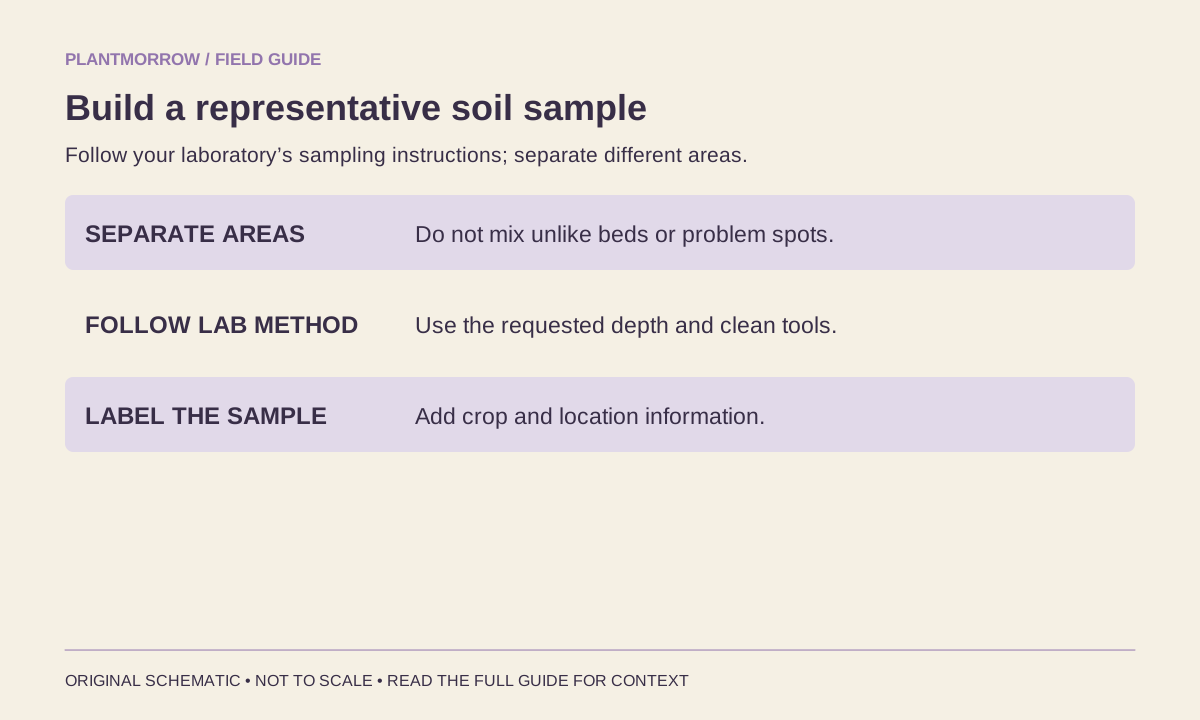
Arrange a soil test through a suitable laboratory and follow its sampling instructions. Representative samples matter: a handful taken from one unusual patch may not describe a whole bed. Keep areas with clearly different histories or management separate when the laboratory recommends doing so.
The University of Minnesota soil-testing guide explains how analysis supports decisions about nutrients, organic matter and pH. Ask which measurements are included and how recommendations are tailored to the intended planting. Different laboratories and regions may report results in different ways.
Read the report before shopping. A recommendation for one nutrient is not a reason to add a general mixture of every nutrient. A high value also matters: repeated additions can accumulate materials the soil does not need. If the report is unclear, ask the laboratory or local extension service for interpretation rather than translating the numbers into an untested recipe.
Keep the result with the date, sampled area and intended crop. Future tests are easier to interpret when you know what was added and whether the sampling method was comparable. A soil test is a useful snapshot; it is not a permanent certificate that a garden will never need another assessment.
Notebook entry four: what does the structure feel like?
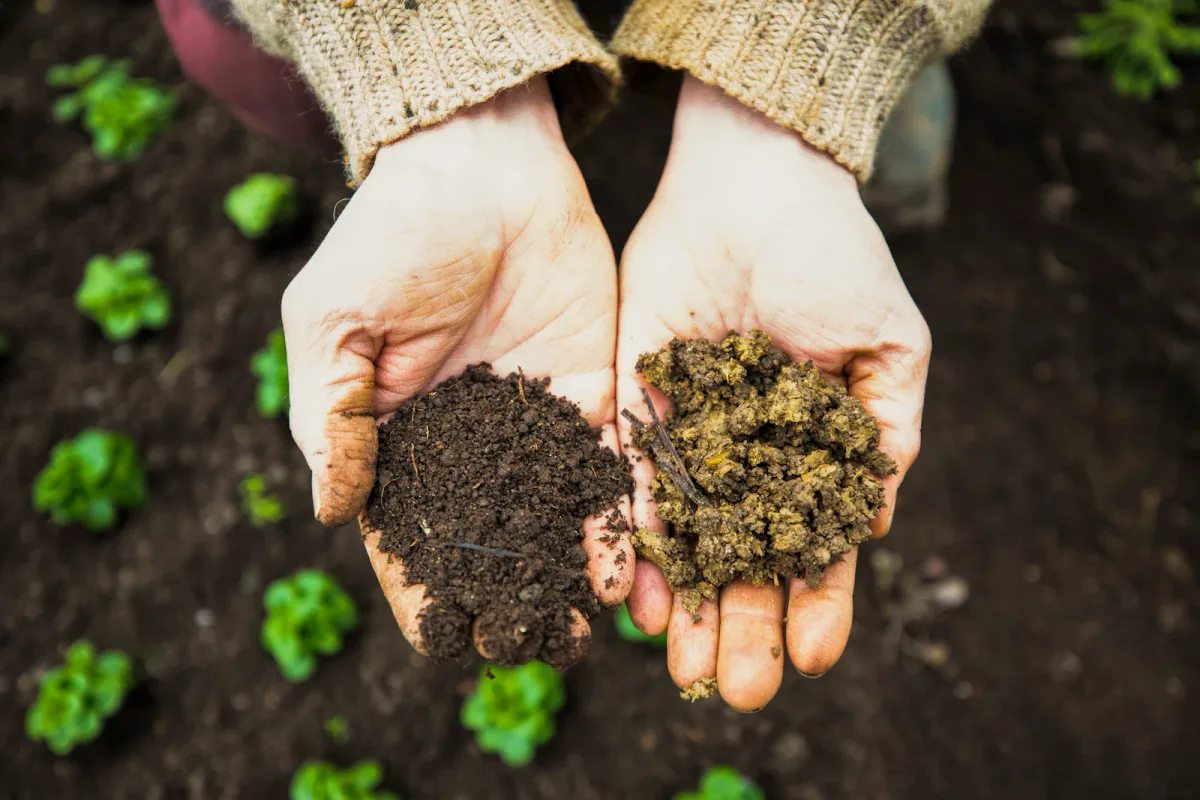
When conditions are suitable, gently examine a small sample. Notice whether it breaks into workable aggregates, falls apart very readily, forms dense clods or shows many roots and pores. These descriptions can help you discuss the soil, but avoid claiming a precise laboratory classification from a casual touch test.
Clay content itself is not a defect to eliminate. Clay-rich soil can hold water and nutrients, while sandy soil presents different challenges. The question is whether the current structure, moisture and management let the intended plants establish useful roots. Attempting to make every soil resemble the same bagged product is rarely a helpful objective.
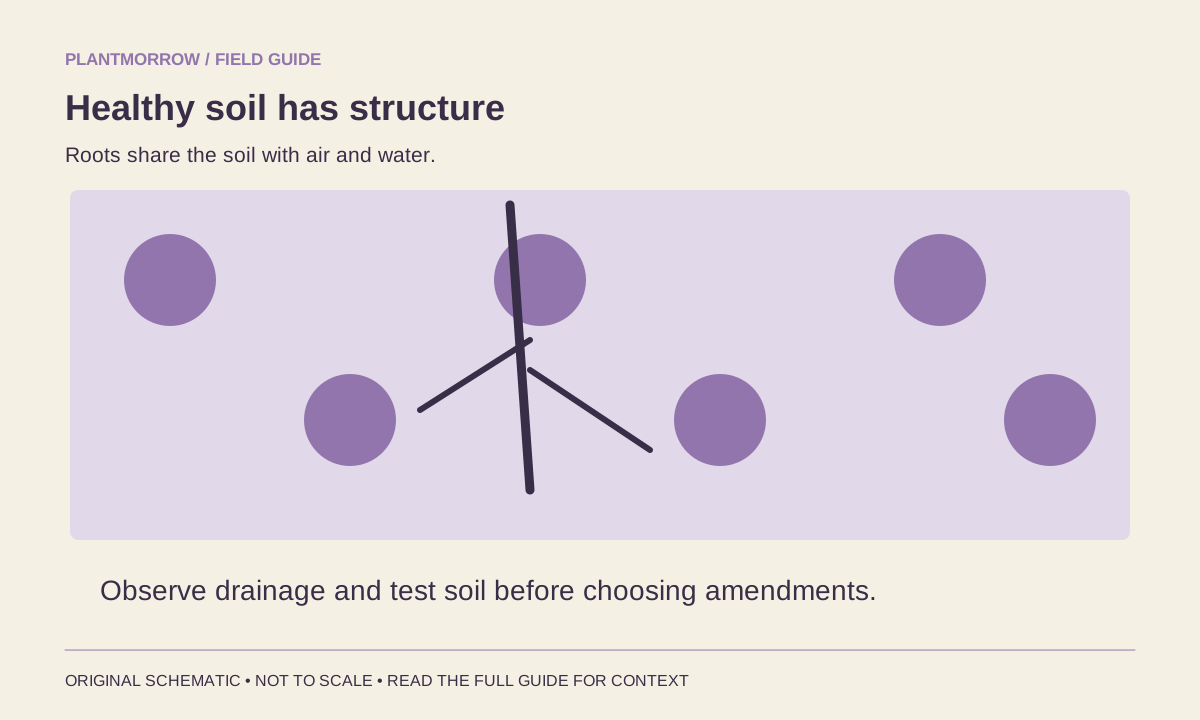
Look at the root zone rather than only the surface finish. A loose top layer can hide a dense or compacted layer beneath it. Conversely, an untidy-looking surface protected by mulch may have a useful growing environment below. Carefully observed roots and water behavior often tell you more than the neatness of the bed.
Avoid adding a small quantity of sand to clay soil as an automatic fix. Changes to texture and drainage require context and appropriate amounts; an improvised mixture can create a new problem. Ask for local advice when the limitation is severe, persistent or related to construction disturbance.
Make organic matter a considered input
Organic matter contributes to soil structure, biological activity and the way water and nutrients are held. It is not one uniform product. Finished compost, fresh plant material and manure differ in their condition, nutrient content and practical use. Choose a material appropriate to the purpose rather than treating all dark bags as equivalents.
New Mexico State University's organic-matter guidance explains both potential benefits and the problems that can follow over-application, including excess salts or nutrients. Its regional examples should not become universal target percentages. The appropriate change depends on the soil and planting, not on a number copied from another climate.
Consider the source and maturity of compost. Ask what it contains and whether information about its properties is available. A material still decomposing rapidly may behave differently from a stable finished product. Repeated annual additions deserve particular attention if a soil report already indicates high nutrient levels.
Keep amendment and fertilizer decisions separate. A product used to improve the physical growing environment may also supply nutrients, but the amounts may not match the crop's needs. Likewise, fertilizer supplies selected nutrients without automatically solving compaction, drainage or lack of root space.
For edible gardens, use appropriate food-safety guidance when considering manure or materials of uncertain origin. Do not assume that “natural” removes every pathogen, contamination or timing concern. If the origin or safe use is unclear, select a better-documented material or obtain local specialist advice.
Protect improvements from everyday damage
Cover bare soil appropriately between active crops. Mulch and suitable cover crops can protect the surface and contribute to a longer-term management approach, but choose them for the site and intended planting. Material piled against stems or covering a newly sown row can create a different problem from the one it was meant to solve.
Keep routine traffic on designated paths. A carefully amended bed can be compacted again by repeated walking during watering and harvest. If plants cannot be reached without stepping among them, revisit the layout in starting a small vegetable garden.
Maintain water delivery thoughtfully. A forceful stream can displace a fine surface or expose roots, while water that repeatedly runs off misses the area you intended to wet. Check the result of an irrigation event instead of assuming that the length of time the hose was running proves an adequate root-zone supply.
The University of Minnesota healthy-soil overview presents soil care as a combination of practices. That perspective is useful: testing, organic inputs, protection and crop management work together. No single purchase replaces the way the bed is used throughout the year.
Separate an observation from a shopping decision
“The surface dries hard” is an observation. “The bed needs this conditioner” is a proposed response. Keep those statements separate in your notebook until you can explain the connection. A dry crust might prompt questions about watering impact, soil texture, bare-surface exposure or traffic; it does not identify one branded solution by itself.
Use the same discipline with plant symptoms. Pale growth can have several explanations, and fertilizer chosen without checking roots, moisture and light may add another variable. If a crop consistently fails in one part of a bed, compare that area with a nearby successful position. Differences in shade, water delivery or previous disturbance may deserve attention before the whole bed is amended.
Product labels can also use similar words for different materials. “Topsoil,” “compost,” “soil improver” and “potting mix” do not describe interchangeable contents. Ask what a material is intended to do, how it should be used and what is known about its origin. A cheap bulk delivery is not good value if it introduces unsuitable material into a food-growing space.
For a straightforward first improvement, choose a small representative area and address one justified management issue. For example, establish a firm access route so you can stop standing on the planting zone. Keep other practices reasonably consistent and record what changes. This is an observation exercise rather than a controlled scientific experiment, but it can still prevent you from repeating an expensive, poorly understood intervention.
When a problem is beyond simple management, a clear description helps a local adviser. Photographs showing the wider site, a recent test report and a history of additions are generally more informative than a list of products already tried.
Compare two hypothetical beds
Bed A receives a fresh layer of compost every year, yet plants are declining. The useful next step is not automatically another layer. The gardener checks water behavior, investigates roots and obtains a current test. If nutrient accumulation or salts are involved, the management response will differ from that for an actual deficiency.
Bed B has a compacted strip where everyone stands to harvest. The gardener changes access first, then considers an appropriate rehabilitation method when the soil is workable. An amendment alone would not prevent the same foot traffic from repeating the damage.
These are illustrative reasoning examples, not diagnoses of your garden. Their value is the order of decisions: observe, identify the likely limitation, obtain the necessary evidence and make a targeted change. If several conditions are changed simultaneously, it becomes harder to understand what helped.
Keep a change log rather than a product collection
Record the material, amount, date and area whenever you add something. Add the reason for the decision, such as a laboratory recommendation or a clear surface-protection need. A product name without context will be less useful when you revisit the bed later.
Compare plant performance and soil behavior under broadly comparable conditions. A wetter year can change the apparent result of a drainage intervention, while a different crop can change what you notice about the root zone. Be cautious about attributing every improvement to the most recent purchase.
If the bed functions well, maintenance may be modest. More intervention is not automatically more attentive gardening. Preserve useful structure, avoid unnecessary disturbance and reassess when a real change or recurring problem gives you a reason to do so.
Frequently asked questions
Can I improve soil without digging every year?
Often, yes. Suitable surface protection, careful organic inputs and reduced compaction can form part of a low-disturbance approach. The best method depends on the existing soil, weeds, crops and limitations. Avoid making annual digging a ritual without a purpose.
Should every garden receive lime?
No. Lime changes soil chemistry and should be considered in relation to a reliable test and the intended plants. Guessing from appearance or adding it because a neighbor does can move the soil away from a suitable condition.
How quickly should improvement appear?
Some practical changes, such as keeping traffic off a bed, prevent further damage immediately. Changes in soil structure and biological processes can take longer. Track the specific problem you are addressing rather than expecting a universal transformation deadline.
What is the best first action?
Describe the problem in observable terms and check the site's history. Arrange an appropriate soil test where needed, then plan one justified change. If your real project is container growing, switch to guidance on container vegetables, because a pot has different physical constraints.
Read further
Sources & further reading
Selected horticultural references used to inform this guide. Local conditions and species-specific advice still matter.
- Soil testing for lawns and gardens
- Managing Organic Matter in Farm and Garden Soils
- Promote healthy soil in your garden
Prepared with AI assistance for Plantmorrow. No independent expert review or first-hand growing trial is claimed. Our editorial approach · Suggest a correction.