Water indoor plants when their root zone has dried to the level that suits the species, rather than when a particular number of days has passed. For a typical leafy houseplant, that means checking below the surface, considering the weight of the pot, and watering thoroughly when the evidence points to a genuine need. A succulent requires a different drying cycle from a fern, even when both live in the same room.
The useful question is therefore not “Is today watering day?” but “What has changed inside this pot?” This decision guide turns that question into a repeatable process. A weekly reminder can help you remember to inspect your plants; it should not automatically trigger a drink for every pot on the shelf.
The three checks before you pick up the watering can
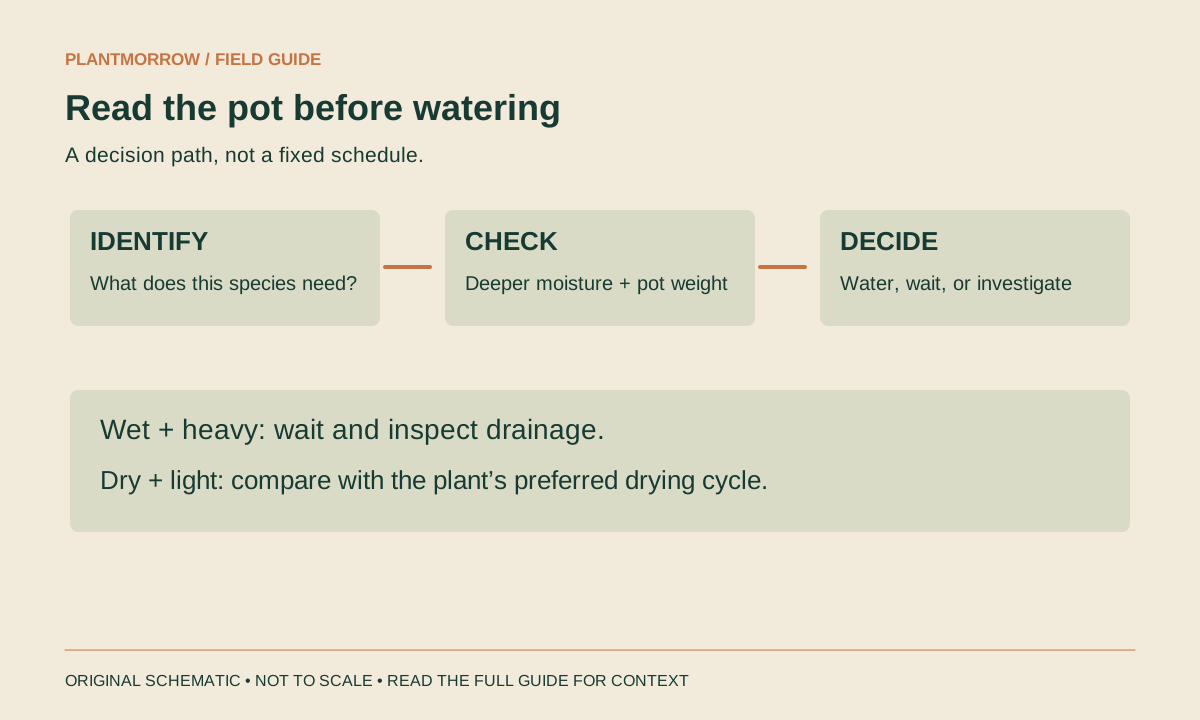
Start with the identity of the plant. Read its label or confirm its botanical name, then find out whether it prefers a consistently lightly moist medium, partial drying, or a much drier interval. Broad categories are useful starting points, but they are not interchangeable instructions. A plant sold as a “tropical” can still have very different roots and water storage from another tropical species.
Next, inspect the growing medium below its dry-looking crust. Insert a finger where doing so will not damage crowded roots. In a larger container, a clean wooden probe can help you assess moisture farther down. A dark, cool surface is not proof that the entire root ball is wet; equally, a dusty top layer can hide a wet lower half.
Finally, lift a manageable pot or gently tilt it to assess its weight. Learn the difference between that particular container shortly after watering and after an appropriate drying period. University of Maryland Extension describes both soil inspection and pot weight as useful checks. The combination is more informative than either observation alone.
Follow this decision path
If the medium is still wet at the relevant depth and the pot remains heavy, wait. Check that drainage water is not trapped in the decorative outer pot. Revisit the plant later rather than adding a small splash “just in case.” A plant does not need another drink simply because its neighbor did.
If the medium is approaching the dryness appropriate for the species and the pot is lighter, prepare to water. Check the plant’s recent history first. A newly repotted specimen in a much larger volume of medium may have a dry outer rim but a damp original root ball. Test more than one location before drawing a conclusion.
If the leaves droop but the medium is wet, investigate instead of watering. Drooping can reflect damaged roots, temperature stress, or other problems. If the medium is dry yet water immediately escapes around the edges, assess whether the root ball has shrunk away from the container or the plant is crowded. These situations need a slower, more deliberate response.
Why one plant dries faster than another
Light, temperature, airflow, the amount of foliage, and the balance between roots and growing medium all influence drying. An actively growing plant beside a bright window can use moisture differently from a similar plant in a dim hallway. Moving a pot is therefore a change in care conditions, not merely a decorating decision.
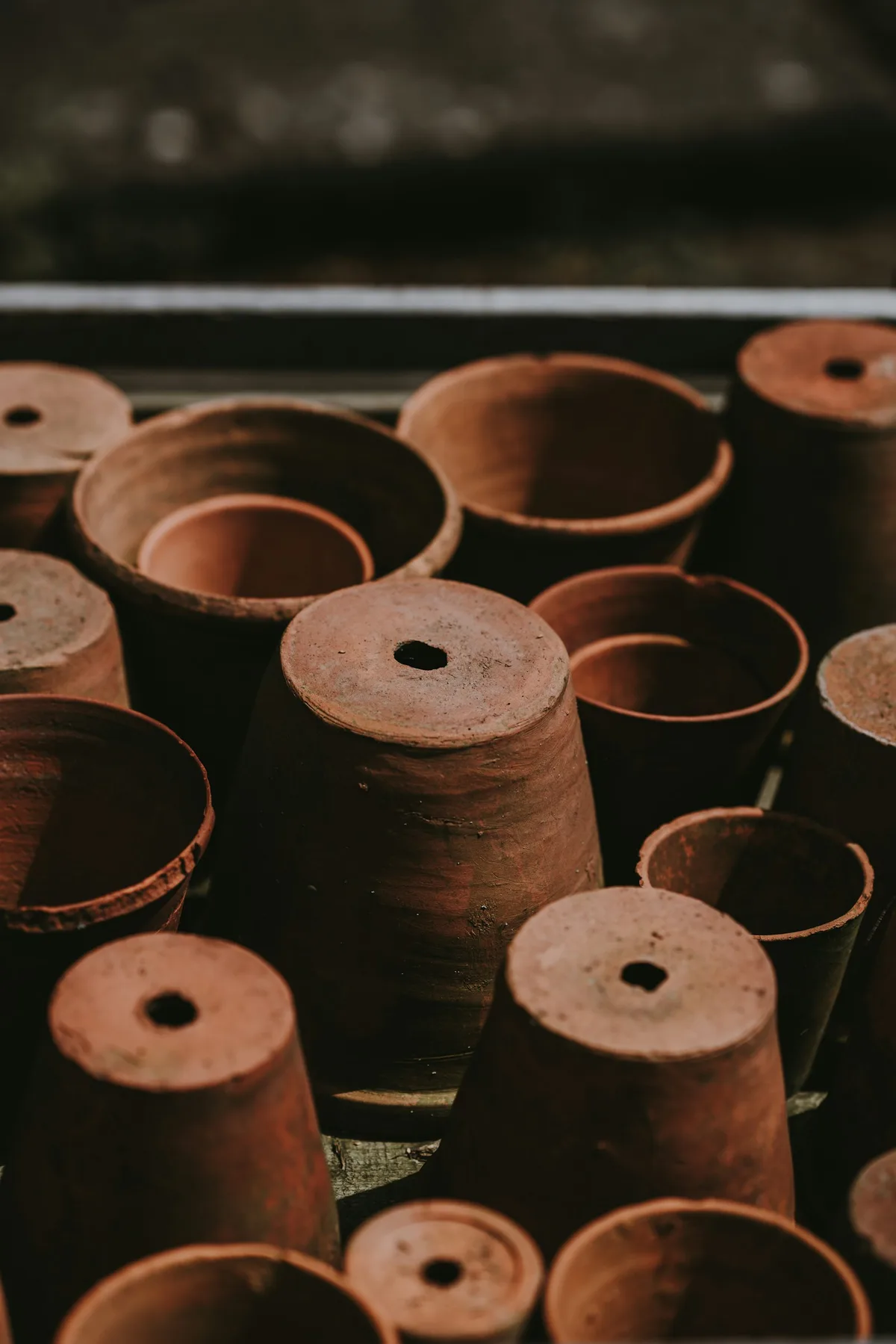
Container material matters as well. Unglazed clay allows moisture to leave through the walls, while a plastic nursery pot generally retains it longer under otherwise similar conditions. Size adds another variable: a small root ball surrounded by a large volume of medium may remain wet longer than expected. Learn more in choosing a houseplant pot.
The medium itself changes the pattern. A loose bark-rich blend, a fine peat-based mix, and a dense old root ball do not absorb and release water identically. Missouri Extension’s houseplant guide emphasizes the combined effect of these conditions. Compare the whole setup before concluding that another grower’s interval will work in your home.
Water the root ball, then let excess water leave
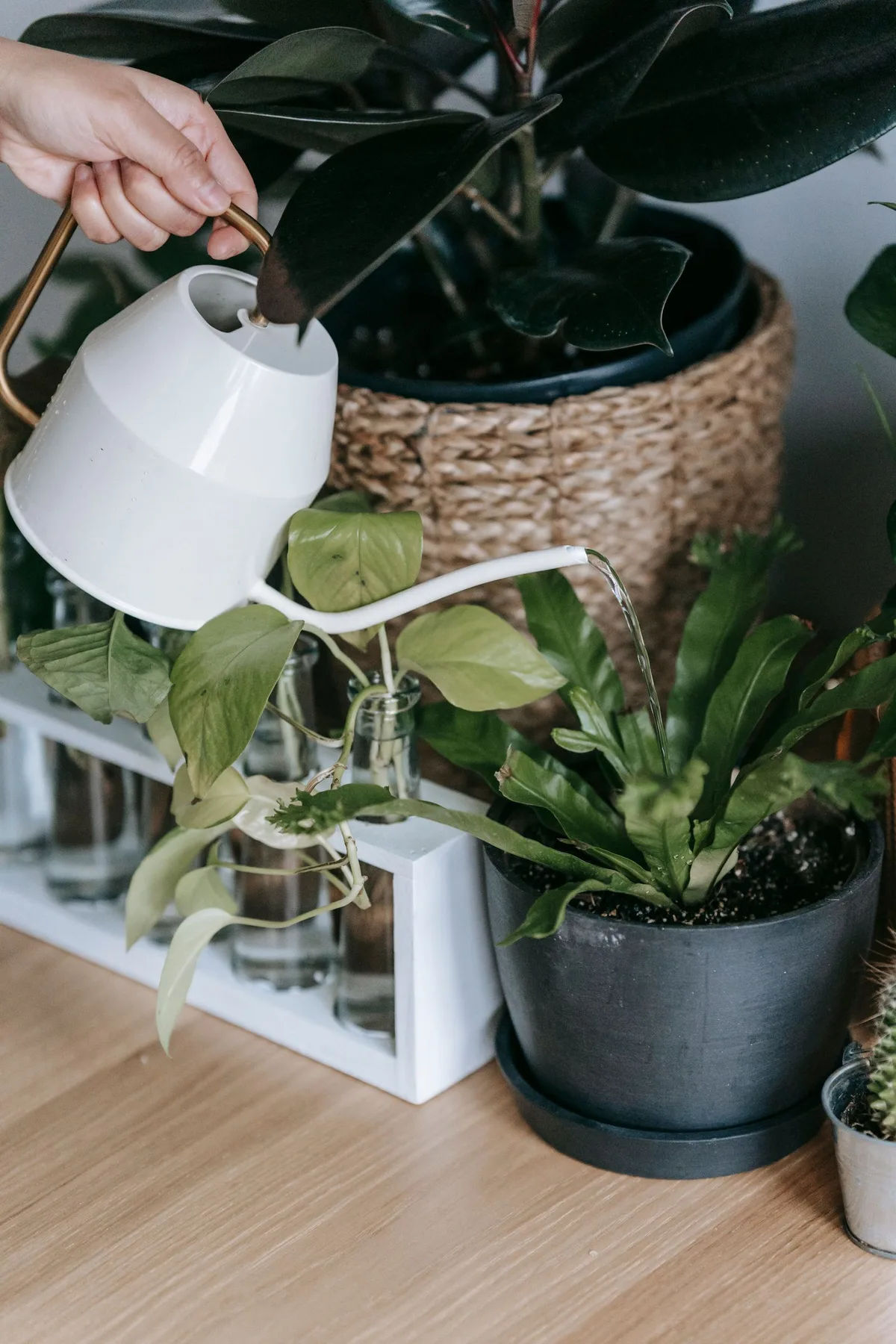
For most conventionally potted houseplants, apply water slowly across the medium until the root ball is evenly moistened and surplus water leaves the drainage holes. Pause if water pools on top; give it time to move into the medium instead of overflowing the rim. Keep the flow gentle around newly planted specimens and exposed roots.
Move manageable plants to a sink or use a suitable saucer that can be emptied. Let the container finish draining before returning it to a cachepot. Check the outer pot afterward: water that is invisible beneath a nursery container can keep the lower roots saturated. A pot with a drainage hole still needs somewhere for that drainage to go.
Avoid treating every watering as a token sip. Repeated tiny additions can leave uneven moisture through the root ball. However, “thorough” does not mean leaving every species submerged indefinitely. The appropriate method still depends on the plant, medium, and container. Self-watering systems, mounted orchids, and specialist growing setups require their own instructions.
A hypothetical shelf with three different watering decisions
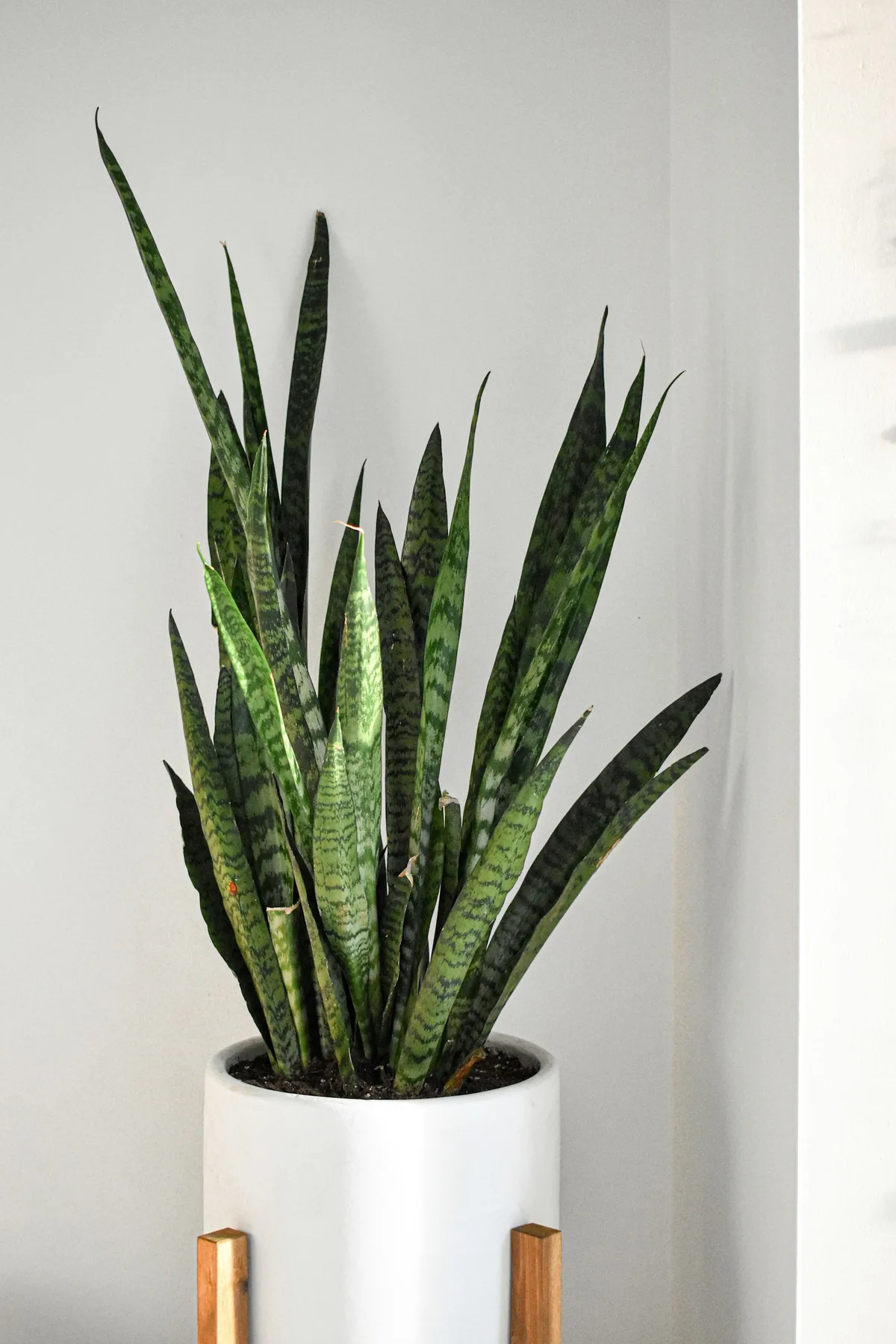
Imagine a shelf containing a fern, a pothos, and a snake plant. The following is a planning example, not a tested timetable. On the same inspection morning, the fern’s medium might be approaching its preferred moisture limit, the pothos might remain lightly damp below the surface, and the snake plant’s lower root zone might still feel cool and wet.
The appropriate response is three decisions, not three equal pours. Water the fern if its conditions call for it. Leave the pothos until its own checks indicate a need. Give the snake plant additional drying time if that suits its condition. Writing “checked; no water” is a useful record, not a missed task.
Now imagine moving the pothos closer to a brighter window. Do not copy its old interval automatically. Observe the revised drying pattern over several inspections. A simple note about location, pot weight, and the day water was actually applied will help you understand the change without pretending that the next interval is permanently fixed.
When a dry pot does not absorb water properly
Very dry growing media can sometimes resist rewetting or develop gaps around the pot wall. Pouring faster may simply send water down those gaps while the center remains dry. Inspect the root ball after a first slow watering, then consider another gentle pass once the initial water has had time to soak in.
For an appropriate plant in a removable drainage pot, a controlled soak may help rewet the medium. Keep the process supervised, follow species-specific needs, and remove the pot so it can drain afterward. Do not extend this approach into a recommendation to keep a struggling plant permanently standing in water.
If poor absorption repeats, examine the container and medium rather than solving the same problem every week. Compaction, severe root crowding, or deteriorated mix may call for corrective work. Use the repotting workshop to decide whether a new container, fresh medium, or simply better watering access is the missing piece.
Change the inspection rhythm with the season
Shorter days can reduce usable indoor light and slow growth, but a heated room or a strong grow-light setup can produce a different pattern. “Winter” is not a reliable moisture reading. Check the actual medium and growth rather than automatically halving every watering or continuing a summer routine unchanged.
In warm, bright periods, inspect plants more frequently if their pots are drying faster. During a quieter growing period, increase the time between actual waterings when the evidence supports that change. The reminder schedule can remain frequent enough to catch trouble, while the watering schedule remains responsive.
An inspection also offers a chance to look for pests, blocked drainage, and a sudden change in leaf condition. If several plants behave differently after you turn on the heating or move furniture, consider that shared environmental change. Winter indoor plant care explains how to make these seasonal adjustments without assuming every plant becomes dormant.
Make watering access part of the setup
A sound decision is difficult to carry out if the pot is wedged behind furniture or hangs beyond comfortable reach. Before choosing a permanent position, work out how you will inspect the medium, apply water, and remove runoff without damaging the room. A decorative container that cannot be lifted safely may need a different inner pot, a protective tray, or a more accessible location.
For large plants, separate the moisture check from the lifting check. You do not need to move a heavy specimen merely to follow a routine designed for small nursery pots. Use accessible inspection points, look into the drainage arrangement, and choose tools you can operate safely. Avoid balancing a full watering can over electrical equipment or carrying an unstable, top-heavy plant to a sink.
Keep the watering container clean and clearly separate from anything used for cleaning products or garden chemicals. The aim is a predictable care process with as few avoidable surprises as possible. If reaching a plant feels like a chore every time, simplify the setup before adding more plants.
Leave useful instructions when someone else helps
An instruction such as “water every Friday” transfers the calendar but not the judgement. For a short absence, label each plant and explain what the helper should check. A photograph showing the usual position of the inner pot, drainage saucer, and accessible medium is often more useful than a long list of plant names.
Group plants by similar inspection needs where practical, but do not combine them under one watering amount merely because they fit on the same tray. Tell the helper that “still damp; left alone” is an acceptable outcome. Ask them to contact you about an unexpected wilt in a wet pot instead of repeatedly adding water.
Before a longer trip, try the handover while you are still available. Watch whether the instructions make sense to a person who does not already know your collection. Adjust unclear labels and demonstrate where excess water collects. This rehearsal is a practical way to prevent misunderstandings without pretending that a fixed dose can replace observation.
Four mistakes that make watering harder
Reading only the leaves. A wilted plant can have dry roots or roots that cannot function in persistently wet conditions. Check the medium before deciding. The distinction between overwatering and underwatering depends on several observations, not a single dramatic leaf.
Trusting the pot’s surface. Decorative stones, moss, and a dry top layer can conceal what is happening deeper down. Make a small accessible inspection point and keep the plant’s actual root zone in mind. Remove decorative covers if they prevent reliable checking.
Treating a meter as an answer machine. A probe can be useful, but readings depend on contact, substrate, and the tool. Compare readings with pot weight and direct inspection. Do not let a single number overrule obvious evidence that the container is still wet.
Changing everything at once. Repotting, feeding, moving, pruning, and watering a struggling plant together makes the result difficult to interpret. Address urgent problems, then make measured changes. A short observation record is more helpful than a complicated care ritual you cannot maintain.
Frequently asked questions
Is watering once a week ever reasonable?
It can describe what happens under a particular combination of plant, pot, light, and season. It should not become a rule that overrides inspection. Use a weekly reminder to check several plants, then water only those that need it. If a container routinely reaches its appropriate drying point sooner, inspect it more often instead of waiting for the reminder.
Should I always water from the bottom?
No single method is best for every setup. Bottom watering can be useful for some drainage pots, while slow top watering allows you to direct water across the medium and observe runoff. Whichever approach you use, confirm that the root ball is actually moistened, empty surplus water, and consider the species and growing medium.
Does misting replace watering?
No. Moisture applied to foliage does not reliably moisten the roots inside a pot. If you mist, understand why the particular plant or growing environment calls for it rather than using it as a substitute for checking the medium. Avoid leaving delicate foliage repeatedly wet when the plant’s care guidance advises otherwise.
What should I record?
Keep the record short enough to use: plant identity, location, moisture observation, and whether you watered. Add an unusual event such as repotting or a heater being switched on. Iowa State Extension’s cultural-problem guide reinforces the value of examining growing conditions rather than guessing from symptoms alone.
Your next inspection
Choose one plant and learn its pot rather than redesigning your entire routine today. Check the medium, note its weight, and look for trapped water. If it does not need a drink, leave it alone. Repeat the observations over time, and a sensible watering rhythm will emerge from the plant’s conditions instead of from a rule on a calendar.
Read further
Sources & further reading
Selected horticultural references used to inform this guide. Local conditions and species-specific advice still matter.
- Watering Indoor Plants — University of Maryland Extension
- Caring for Houseplants — University of Missouri Extension
- Diagnosing Houseplant Problems Related to Poor Culture — Iowa State University Extension
Prepared with AI assistance for Plantmorrow. No independent expert review or first-hand growing trial is claimed. Our editorial approach · Suggest a correction.