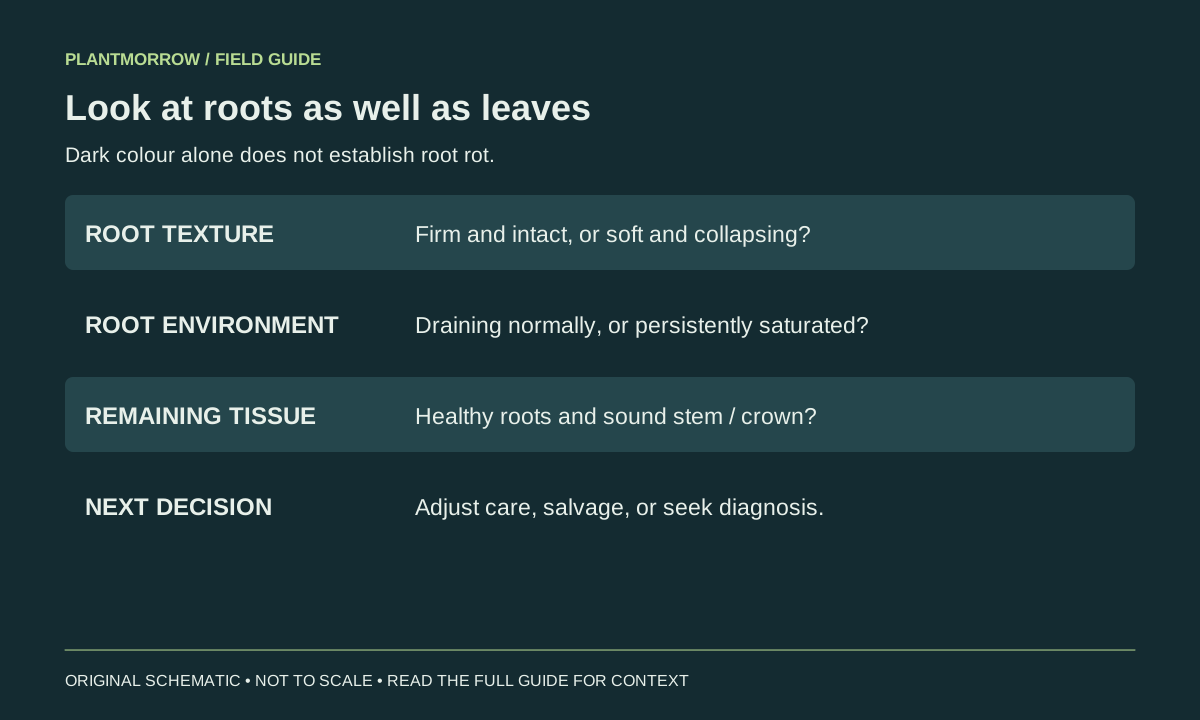
Suspect a root problem when a houseplant keeps declining even though its potting mix remains wet, but do not diagnose root rot from yellow leaves alone. The useful evidence is below the surface: roots that have lost firmness, outer tissue that slips away, deterioration around the crown, and a wet environment that is not supporting healthy roots. Dark colour by itself is not enough.
This guide uses diagnostic case files to separate a merely wet pot from damaged roots and from a plant whose remaining tissue cannot realistically be saved. The cases are hypothetical teaching examples, not Plantmorrow experiments. They help you choose a proportionate next step rather than applying the same aggressive rescue routine to every struggling plant.
Open the file: what root rot means in practice
“Root rot” describes deteriorating roots; it is not a reliable identification of a particular pathogen. Several organisms and environmental problems can be involved. A home inspection can reveal damage and unsuitable growing conditions, but it generally cannot establish which organism is responsible. That distinction matters because a bottle advertised for one problem is not a universal solution.
Healthy roots need a suitable balance of water and air. A container that stays saturated, a blocked drainage hole or a decorative pot full of runoff can leave an unsuitable root environment. However, simply finding damp mix does not establish rot. Many plants are watered thoroughly and remain healthy because their media, drainage and watering intervals suit them.
Gather the history before unpotting. Note when the plant last grew normally, when symptoms began, whether it was recently repotted and whether its pot is much larger than the root ball. Record the watering method, not just the calendar interval. Water poured into a sealed cover pot behaves differently from water allowed to drain freely from an inner nursery pot.
Do not fertilize a declining plant as a diagnostic test. Extra nutrients cannot replace missing roots and may add stress. If you want to understand how a container can remain wet, read the watering comparison before changing several care practices simultaneously.
Case file A: wet mix, but roots remain firm
Imagine a recently watered houseplant with pale lower leaves and a heavy pot. It is tempting to cut roots immediately, especially after reading that yellow leaves indicate rot. Instead, remove standing water from the outer container, confirm drainage and inspect the root ball only if the plant's condition or watering history justifies it.
When the plant can be handled safely, support the container and root ball rather than pulling the foliage. Tip it out gently. A tightly rooted plant may need its flexible nursery pot squeezed; a very large or fragile plant may need help or a different inspection method. Do not break the root ball apart merely to satisfy curiosity.
Suppose the roots are firm and the mix is evenly moist, without widespread tissue collapse. That observation does not prove every root is healthy, but it gives you little reason for drastic surgery. Return the plant to an appropriate container, correct any obvious drainage issue and investigate light, temperature and watering frequency.
The key distinction is between evidence and fear. Removing sound roots reduces the plant's functioning root system. Replacing all the mix, cutting foliage and applying several treatments can create a new recovery problem when the original issue may have been an unsuitable position or recent environmental change.
Case file B: part of the root system is deteriorating
Now consider a plant whose lower root ball stays wet and whose roots include several soft, collapsing sections. The outer root tissue may separate when handled gently. Some upper roots and the crown still appear firm. This is more concerning than colour alone and can justify a careful attempt to preserve the remaining healthy material.
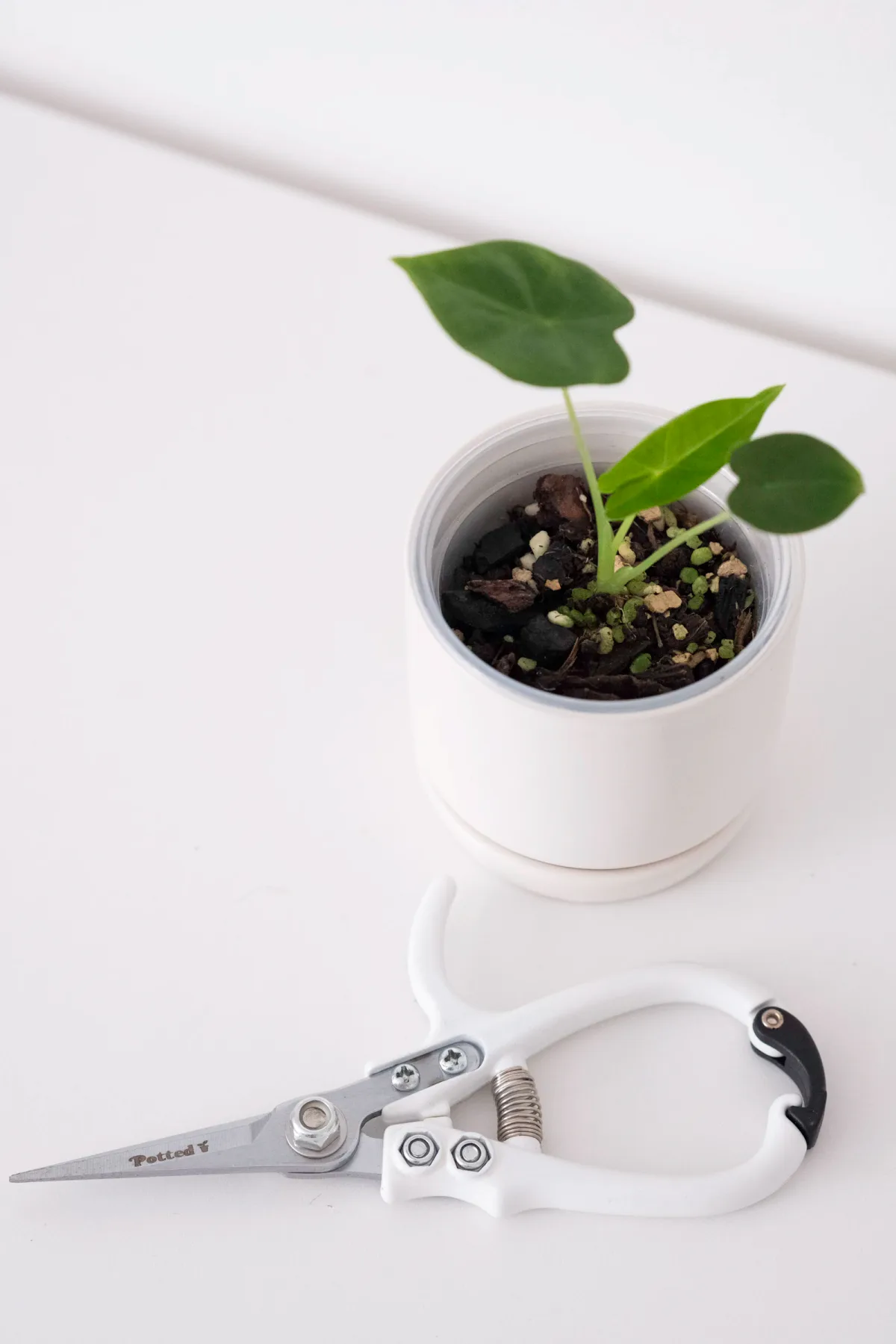
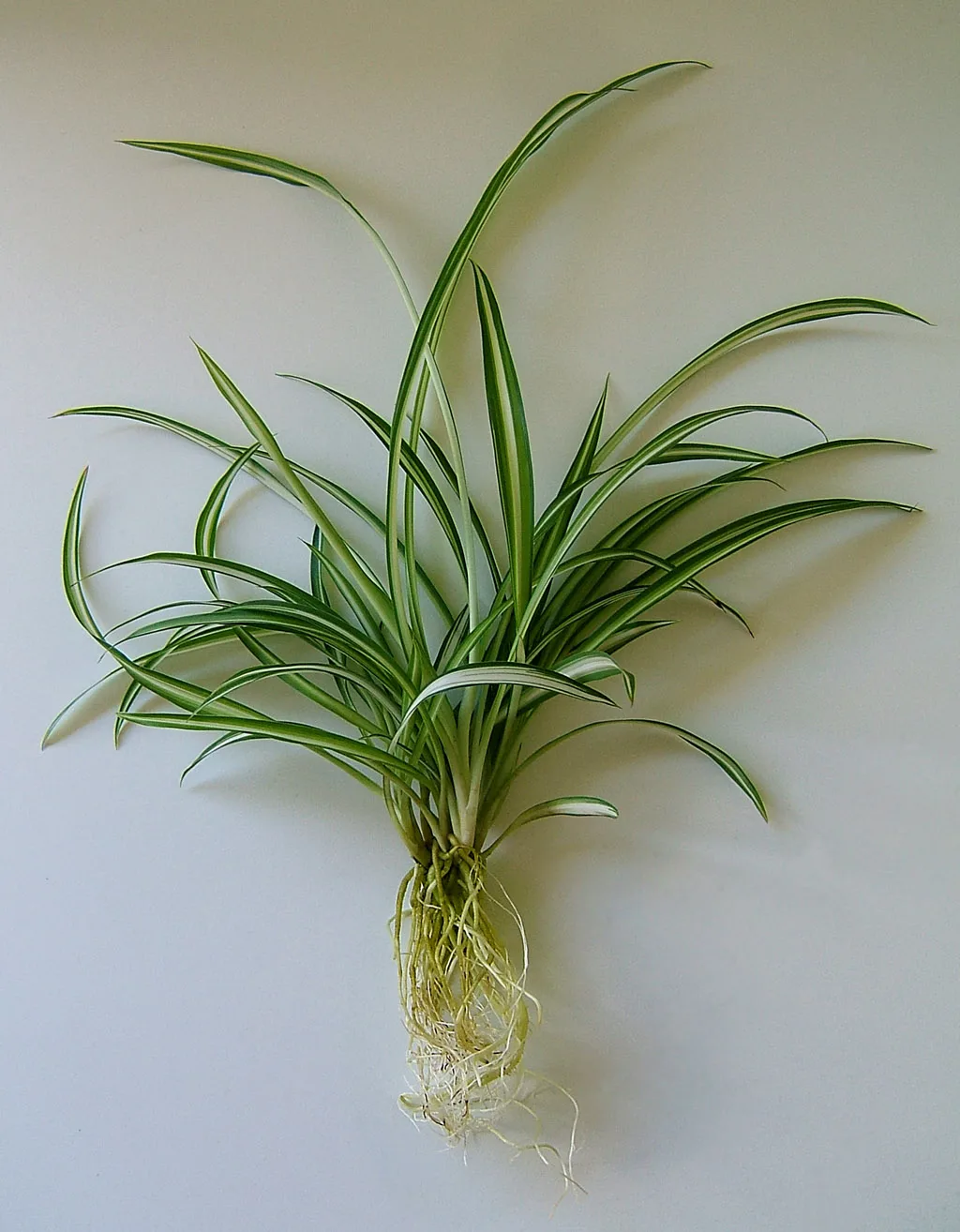
Work on a washable surface away from other plants. Use clean cutting tools and a clean pot with open drainage holes. Remove loose contaminated mix where practical without scrubbing every healthy root. Trim clearly dead or mushy material back to sound tissue; do not keep cutting merely until every root matches an imagined white reference photograph.
Select a container that fits the remaining root system. A plant that has lost many roots may need a smaller pot rather than the larger decorative planter it occupied before. An excessive volume of unoccupied wet mix can make management harder. Use a suitable fresh potting mix for the species instead of reusing material from the compromised root ball.
Do not automatically add a thick stone layer at the bottom. The important features are an appropriate mix, an unobstructed outlet and care that responds to the root ball. Our pot selection guide explains the relationship between container dimensions and the amount of mix around the roots.
Watering after intervention requires judgement. Fresh mix should not be left completely dry around a species that needs consistent moisture, but repeated saturation is not a treatment either. Check the actual condition of the mix and follow species-specific repotting guidance. Avoid a fixed rule such as “never water for a week,” which ignores the plant and material involved.
Case file C: the crown or most roots have collapsed
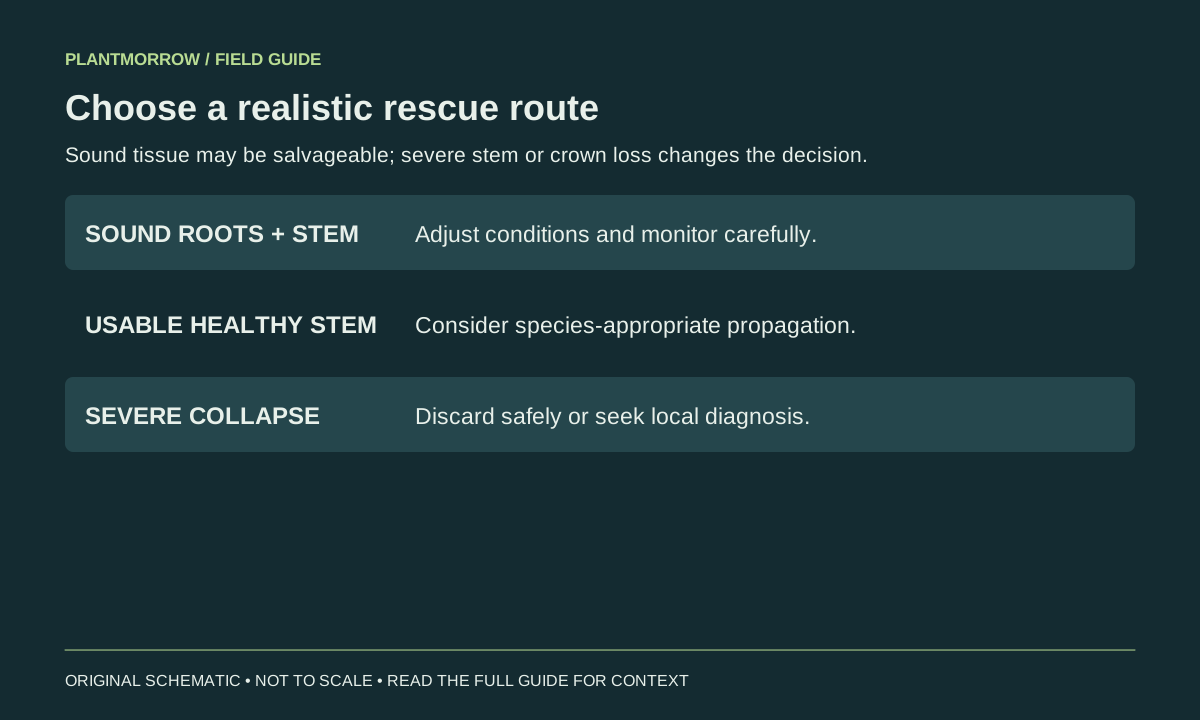
Some plants cannot be restored simply by repotting. If the main stem base is extensively soft, most roots have disintegrated or deterioration continues into the crown, consider whether a rescue attempt is realistic. Keeping a severely affected plant among healthy ones can also complicate hygiene and monitoring.
For a plant that can be propagated, an unaffected cutting may offer a separate route, provided that sound tissue can be identified and the species supports that method. This is not a guarantee that a cutting is free from disease. Keep any attempted propagation separate and use clean materials. The cuttings guide explains basic preparation without promising success for every species.
Discard a plant when no viable tissue remains or when the effort and uncertainty outweigh its value to you. That is a practical management choice, not a failure of commitment. Do not compost suspicious diseased material in a way that could spread it to other plants; follow local waste guidance and keep used mix away from the healthy collection.
Do not attempt to identify a pathogen by smell or by comparing a single photograph online. Odour may alert you to an unhealthy pot environment, but it does not tell you which organism is present. A plant clinic or extension service may be able to advise on sampling when an unusual, valuable or repeatedly affected plant warrants further investigation.
The recovery record: what to watch next
After an intervention, place the plant in suitable light without abrupt extremes and keep it away from unnecessary environmental changes. A badly reduced root system will not necessarily support the plant as it did before. Avoid interpreting every temporary change in posture as evidence that another complete repotting is needed.
Track the pot's drying pattern and whether further soft tissue appears. New growth, stable stems and a gradual return to predictable water use can be encouraging, but none provides a universal deadline. Existing damaged leaves may remain unattractive, and a plant can look imperfect while its condition has stopped worsening.
Choose one observation interval that you can maintain without repeatedly disturbing the roots. Look at the foliage and pot routinely, but do not unpot the plant each time you feel uncertain. Repeated handling damages fragile new roots and prevents a stable environment from developing.
If deterioration continues, review the remaining evidence. Was diseased tissue left in the crown? Is water still trapped in a cover pot? Is the new pot too large? Is the plant being kept in conditions unsuitable for its species? A local adviser will be better able to help if you can describe what was removed and how the plant has behaved since.
Three details worth documenting during an inspection
First, distinguish where the damage occurs. Roots at the bottom of a water-filled cover pot may look different from those near the upper surface. A firm crown with a few damaged outer roots presents a different situation from softness extending into the main stem. A simple sketch of those locations is often clearer than an unsorted collection of close photographs.
Second, record what the container contains. An inner plastic pot, decorative stones on top, a tightly packed plug around the original roots and fresh mix added outside it can create several zones with different moisture behaviour. Check whether the centre and edges actually feel similar. The appearance of the loose outer mix alone may not describe the original root ball.
Third, describe the material you removed without overstating what it proves. “Several roots were soft and their outer tissue slipped off” is a useful observation. “The plant definitely has a named fungal disease” is a conclusion that normally needs more support. Keeping those statements separate makes later professional advice more productive and reduces the temptation to buy a product aimed at an unconfirmed target.
When choosing whether to continue a rescue, account for your ability to provide suitable care afterward. A technically possible intervention may not be the best decision if the plant requires conditions you cannot offer. You can keep photographs and learn from the container problem even if you decide to discard the plant. Replacing it with a species better matched to the space can be a more sustainable choice than maintaining a cycle of repeated decline and emergency repotting.
The same reasoning applies when several plants are affected. Look for a shared container practice or watering change, but inspect each plant individually. A common cause does not mean that each root system has suffered the same amount of damage or that every plant needs identical trimming.
Close the route by which the problem developed
Preventing recurrence involves more than pouring less water. Learn the difference between the inner growing pot and the decorative outer container. After watering, check that surplus water has left the root zone. If the pot has a built-in reservoir, use it according to its design and the plant's requirements rather than treating it as an ordinary sealed pot.
Match watering checks to seasonal growth and changing light. A plant may use water differently after a move, during a darker period or after losing roots. The same calendar interval can produce very different moisture conditions in those situations. A quick assessment of weight and lower root-ball moisture is more useful than assuming that last month's routine remains correct.
Inspect new plants before adding them to a collection. Look for a stable stem base, appropriate pot moisture and signs of decline. Keep tools and containers clean between plants, and avoid reusing suspect mix. These habits reduce avoidable problems without pretending that every disease can be excluded from a home.
Finally, retain a clear plant identity whenever possible. Species differ in root appearance, natural growth cycles and tolerance of drying. Instructions for a desert succulent are not interchangeable with instructions for a moisture-loving foliage plant. The potting mix guide can help you connect the plant's needs with a manageable root environment.
Questions from the clinic desk
Are brown roots always rotten?
No. Roots vary naturally in colour and can be stained by the surrounding material. Compare texture and integrity as well as colour. Soft, disintegrating roots are more concerning than firm roots with intact tissue. Inspect the plant as a whole instead of cutting every root that is not white.
Can I cure root rot with hydrogen peroxide, cinnamon or fertilizer?
Do not substitute household recipes for diagnosis and appropriate growing conditions. They can damage tissue, introduce uncertainty or fail to address the actual cause. Fertilizer is not a replacement for roots. If a pesticide or disease-management product is being considered, obtain local guidance and use only a product labeled for the plant, setting and problem.
Should I remove every yellow leaf during rescue?
Not automatically. Remove fully dead tissue and material that impedes safe handling, but avoid unnecessary loss of functioning foliage. The amount of pruning a plant tolerates depends on its species and condition. Cosmetic tidying should not distract from evaluating the roots and crown.
How soon should recovery happen?
There is no dependable schedule that applies to every plant. Root loss, season and growing conditions all matter. Record whether deterioration is continuing and whether new growth is sound. Seek more help if tissue keeps collapsing rather than repeating increasingly aggressive treatments to meet an arbitrary deadline.
Read further
Sources & further reading
Selected horticultural references used to inform this guide. Local conditions and species-specific advice still matter.
- University of Maryland: Diagnose Indoor Plant Problems
- UC IPM: Houseplant Problems
- Iowa State: Diagnosing Houseplant Problems
Prepared with AI assistance for Plantmorrow. No independent expert review or first-hand growing trial is claimed. Our editorial approach · Suggest a correction.